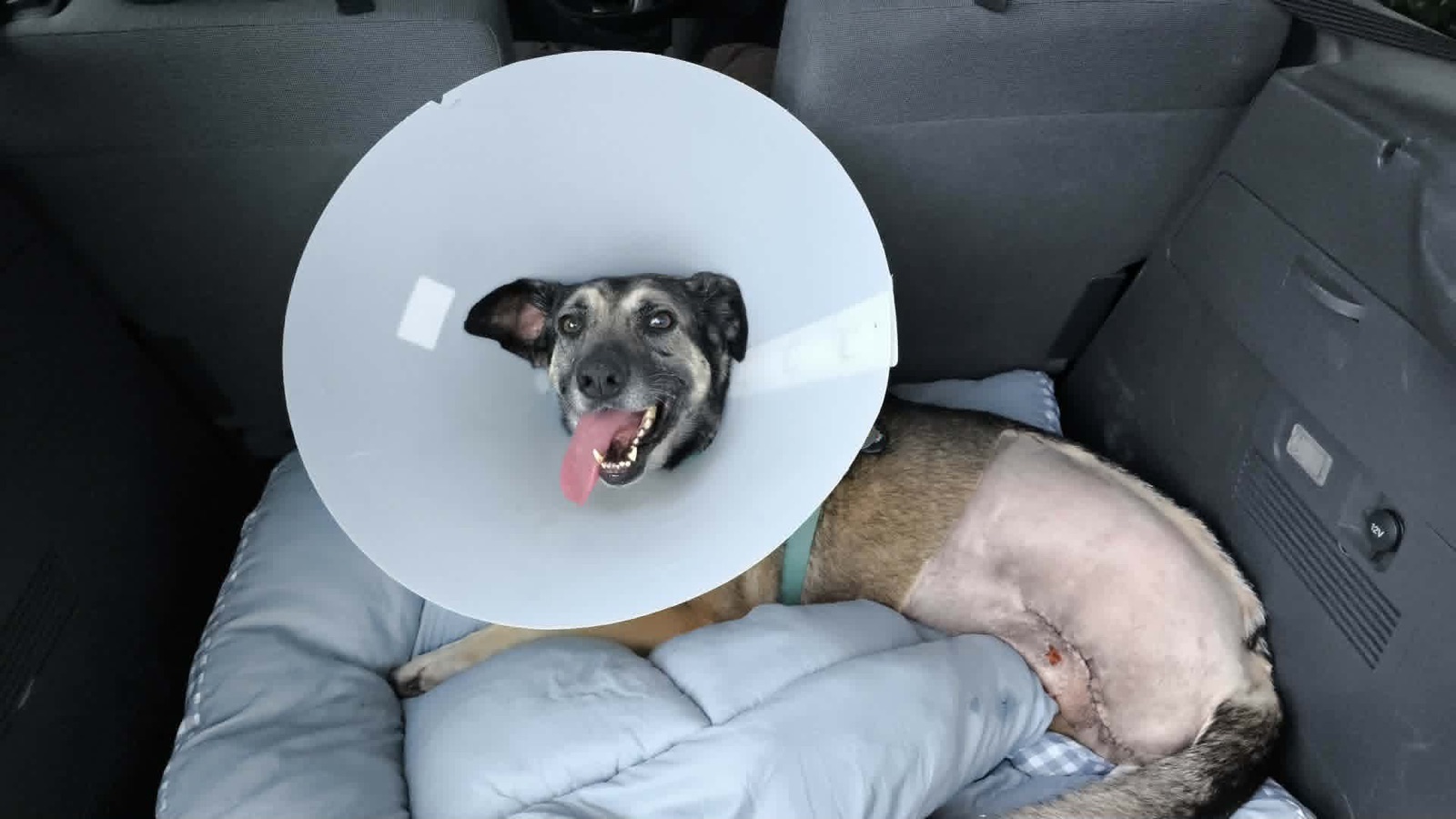
Máli's Story
I happened to be at the Csömör shelter the day they brought Máli in. It was the first time I saw someone fill out a surrender form. It was a woman, very sad. It must have been a hard decision.
Máli had come to her two years earlier, from an acquaintance or a relative, maybe because the owner had fallen ill — I don't remember anymore. Since then she had written to the shelter several times; she too had tried to rehome Máli, because she was away for most of the day.
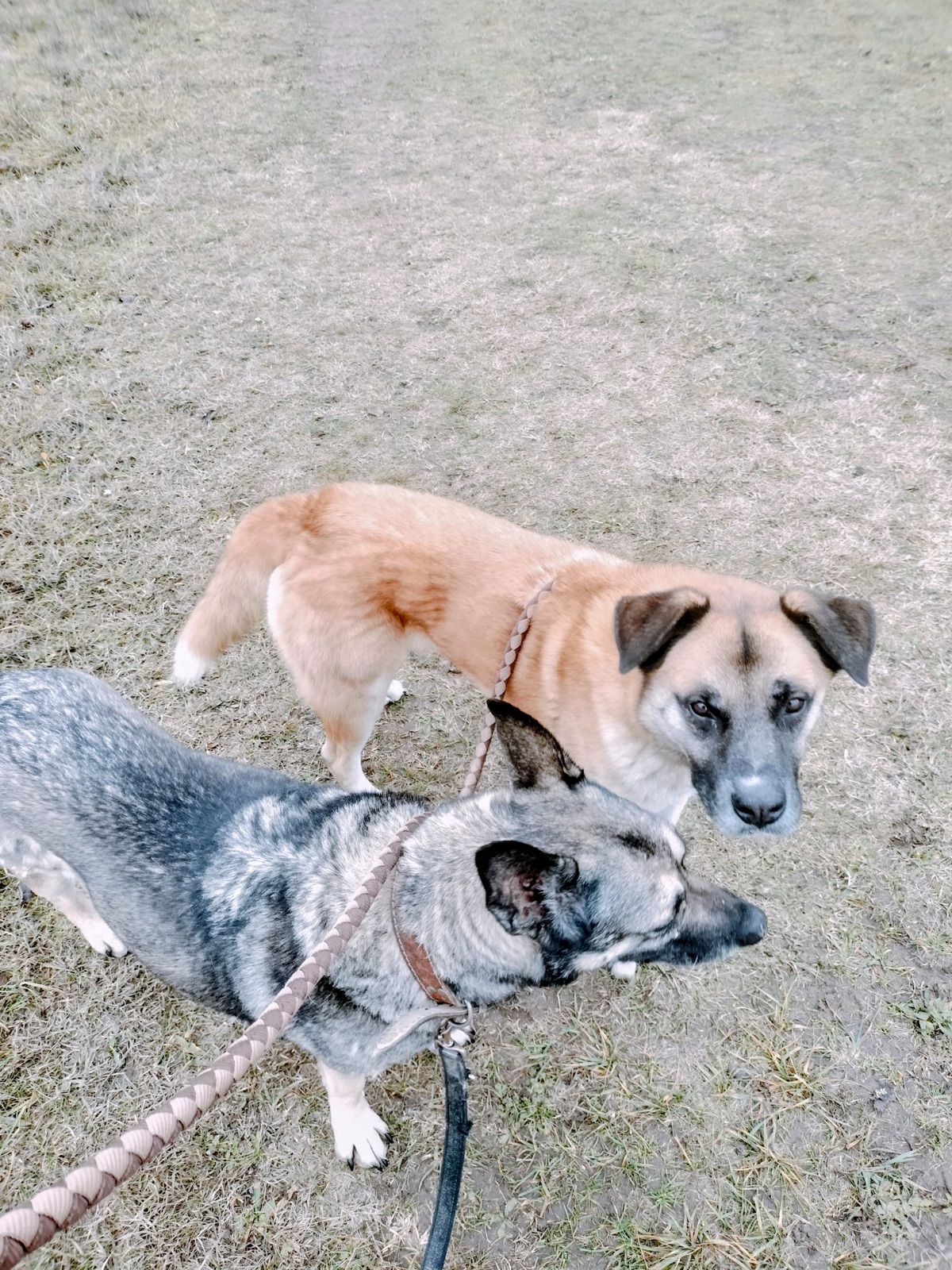
Máli is an escape artist — first from the garden, then from the outdoor kennel too. In the end the owner's solution was to keep her in a crate while she was out. That's why she wanted Máli to have an owner who could spend more time with her.
She arrived meekly, not understanding what was happening or why she couldn't go home. It was a terrible sight. Somehow it's easier when a dog comes in off the street. I would have taken her home that very day.
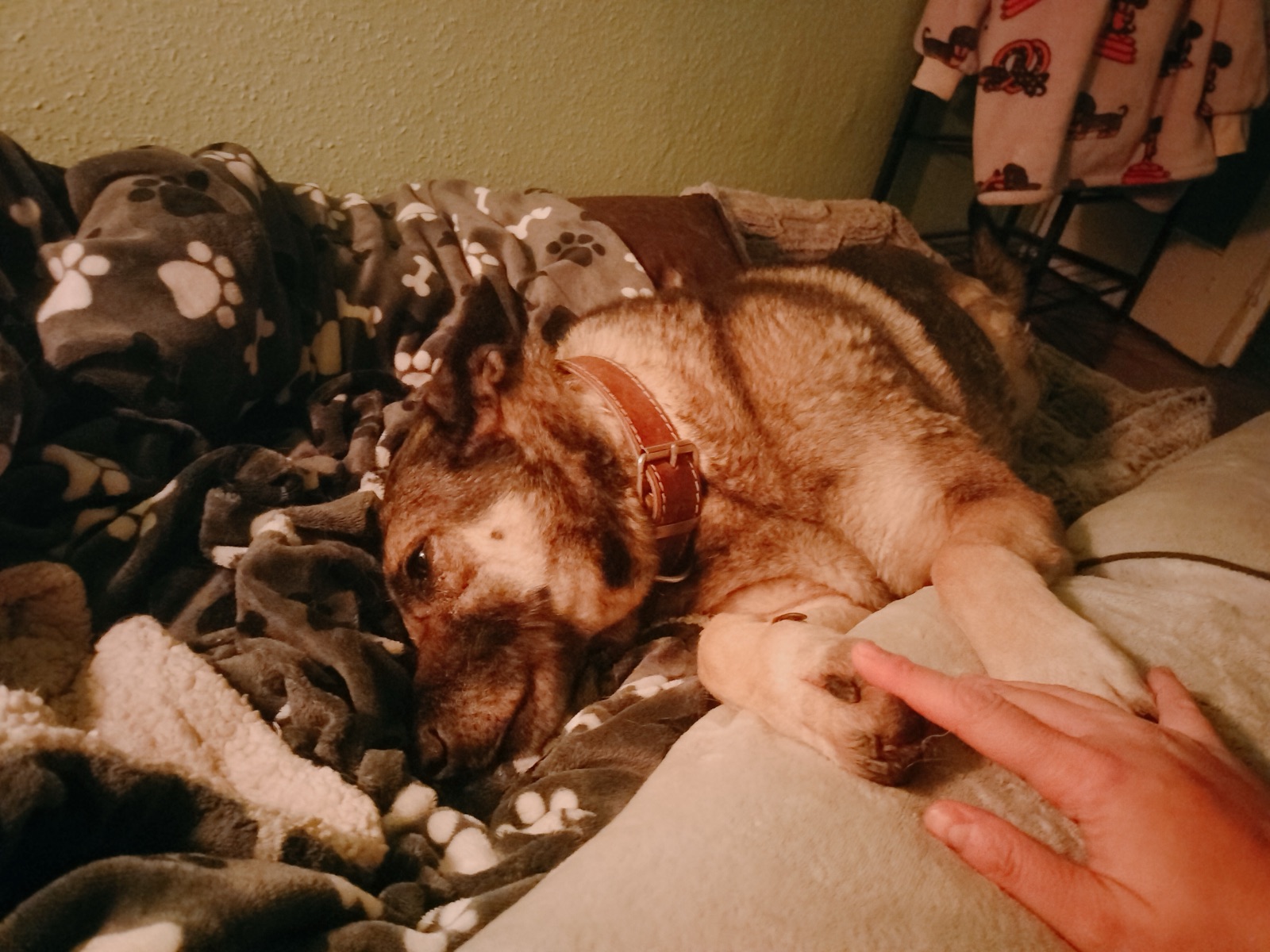
For a long time she was kennel-clean so she wouldn't relieve herself in the kennel. So on many days she was the first to go out for a walk, because she'd hold at least her poop between 1–2 in the afternoon and 8 in the morning.
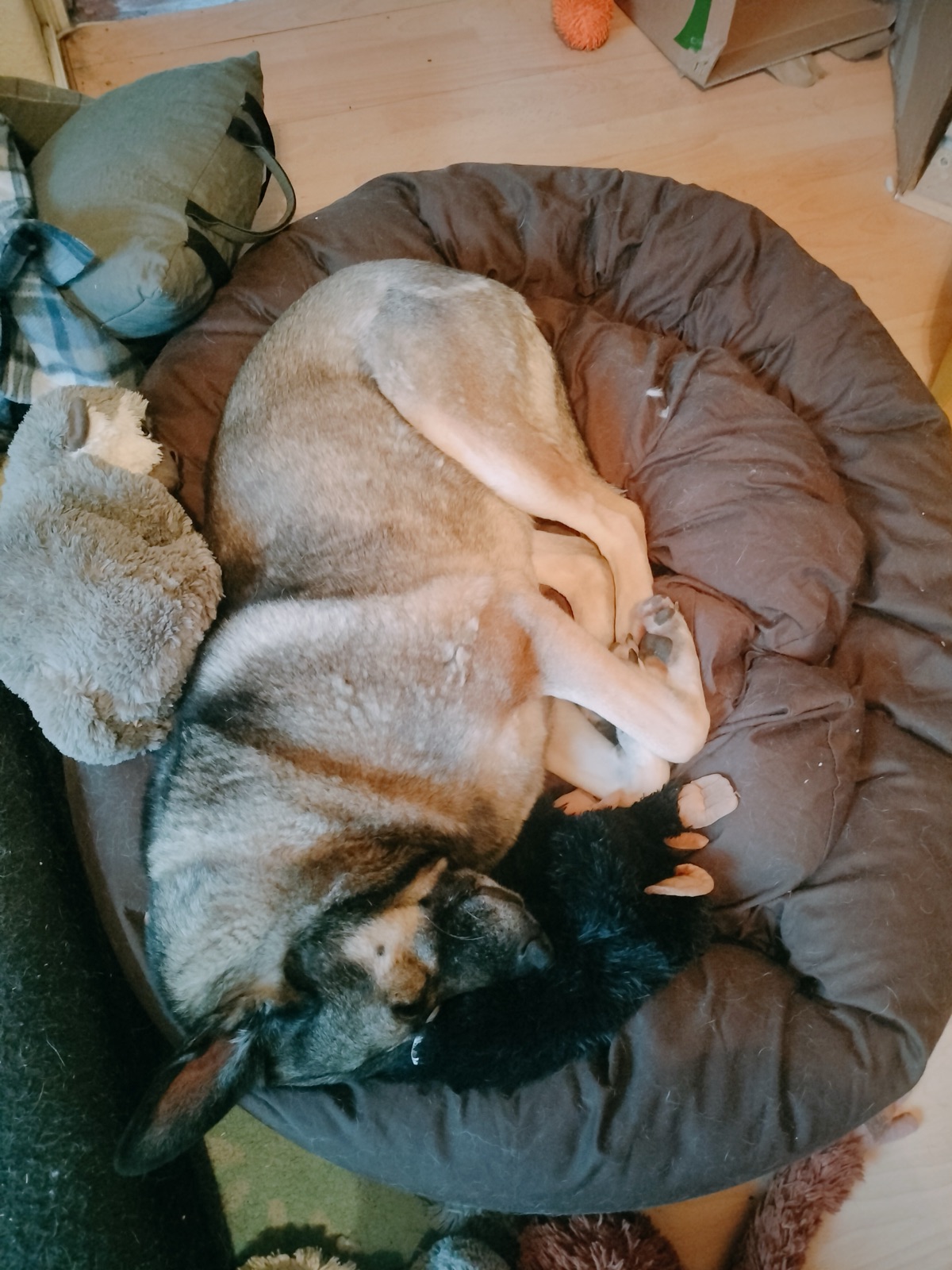
It was really nice to walk her at the shelter, too. Back then she still lived alone in her kennel. She wasn't happy at the shelter because she's more of a people-oriented dog.
At first there was no focus on socializing her with other dogs. On an outing — the Csömör group walk, the Csatangoló — it turned out she walks nicely with other dogs, and she had a great play session with another shelter favorite of mine, Wendy.
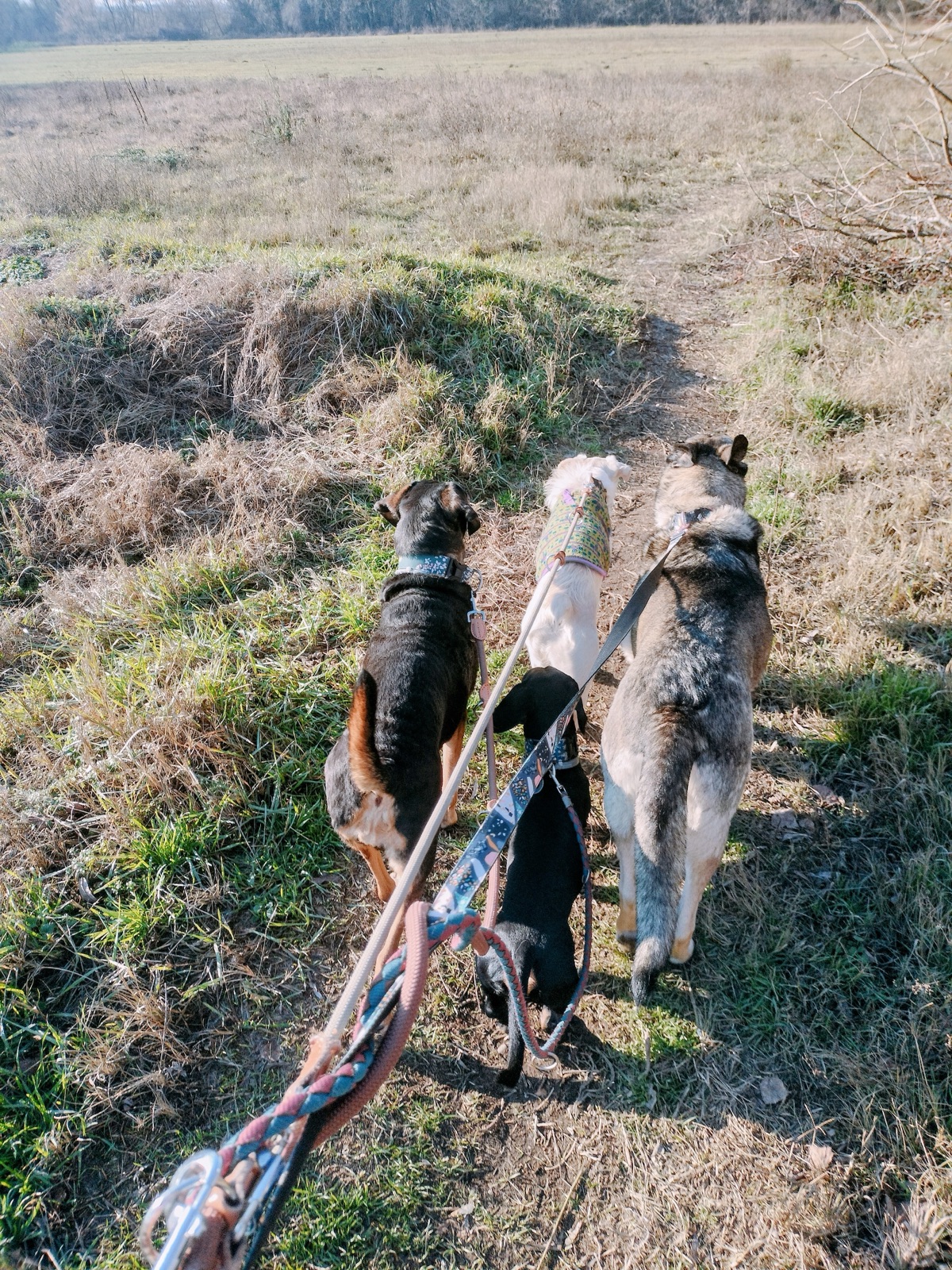
At the end of the outing my partner joined too, with Bab and Lili. It had actually been his idea for me to go volunteer at the shelter, because I'd been saying for a long time that I wanted to foster. Back in July he still said I could go, but not bring a dog home.
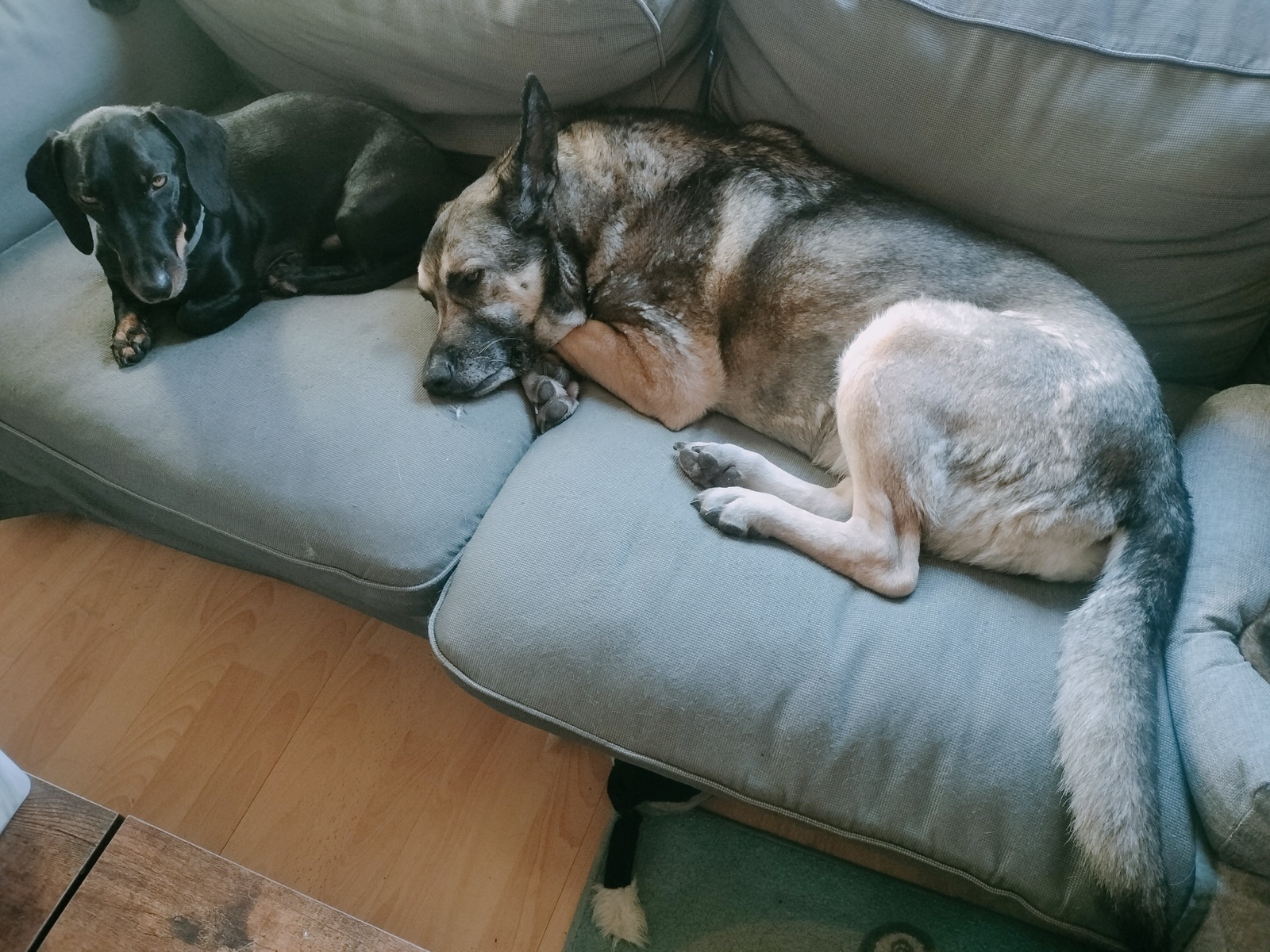
When he saw Máli, he fell for her right away. Máli is the spitting image of his childhood dog, and she completely charmed him by running straight up to him, as if they already knew each other.
Then a long conversation started. At first we wanted to bring her home as a foster, suspecting we'd fail to give her back anyway. She would have been our second foster dog.
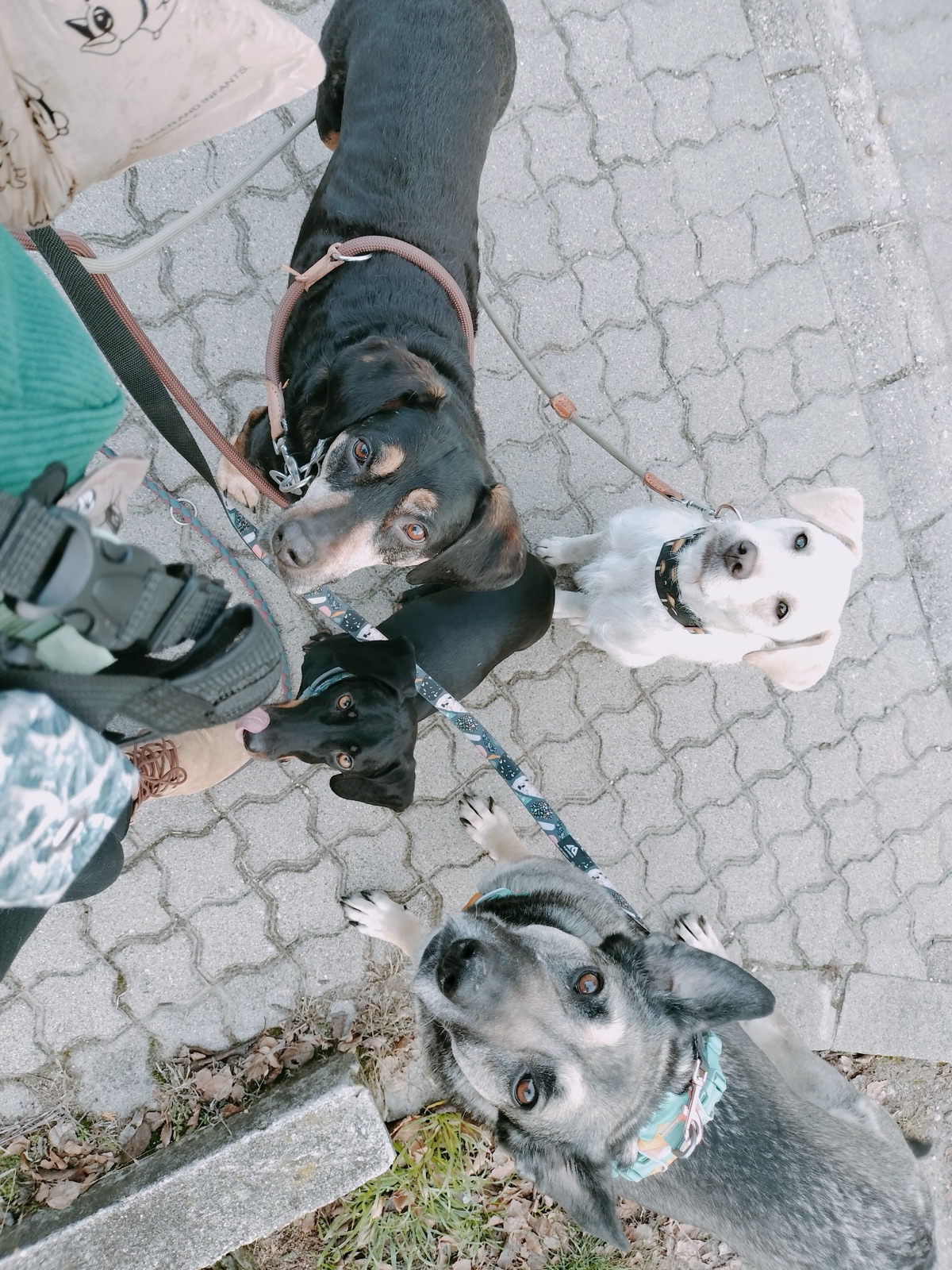
We didn't know how well she'd tolerate the fact that Lili can be grumbly and jealous. Lili has had several surgeries on her hind legs, and if a bigger dog attacked her it could cause serious harm.
In the end a fearful little dog, Laska, had a greater need for fostering at the time, so she moved in with us. We were preoccupied with Máli every day; my partner also often took our dogs so they could walk together near the shelter.
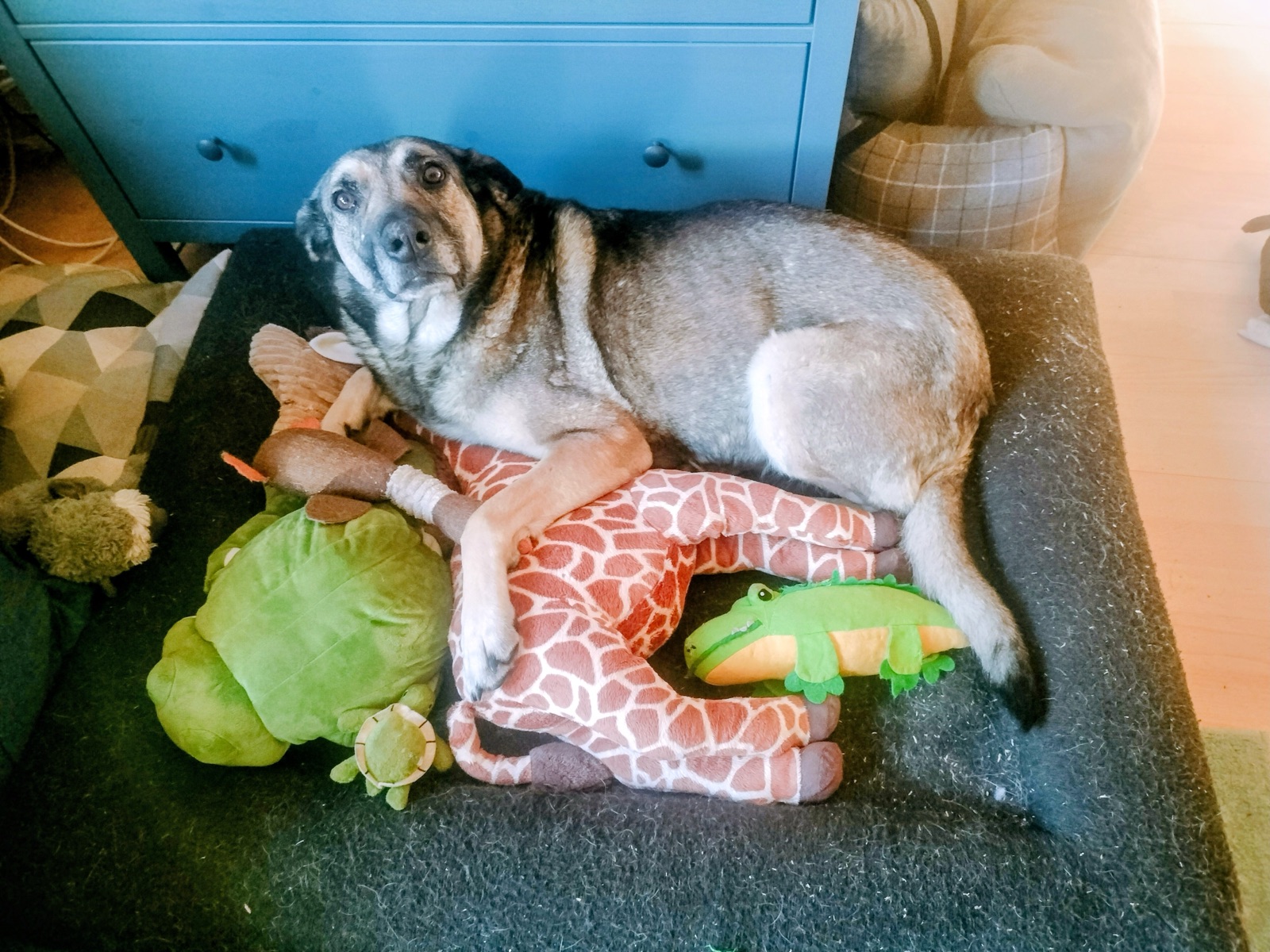
Laska warmed up to us very slowly, and there was no owner on the horizon. She came to us in mid-October from another foster, and by mid-December she still had no prospective adopter. Our first foster stint had lasted two and a half weeks, and we knew it was a gamble, but we thought it would be quicker.
By early December Máli felt very unwell at the shelter — she was visibly sad, even though by then she also had a companion, Rex. She grew less and less excited when I approached her kennel; she knew I could only spend about half an hour with her a day, while we walked.
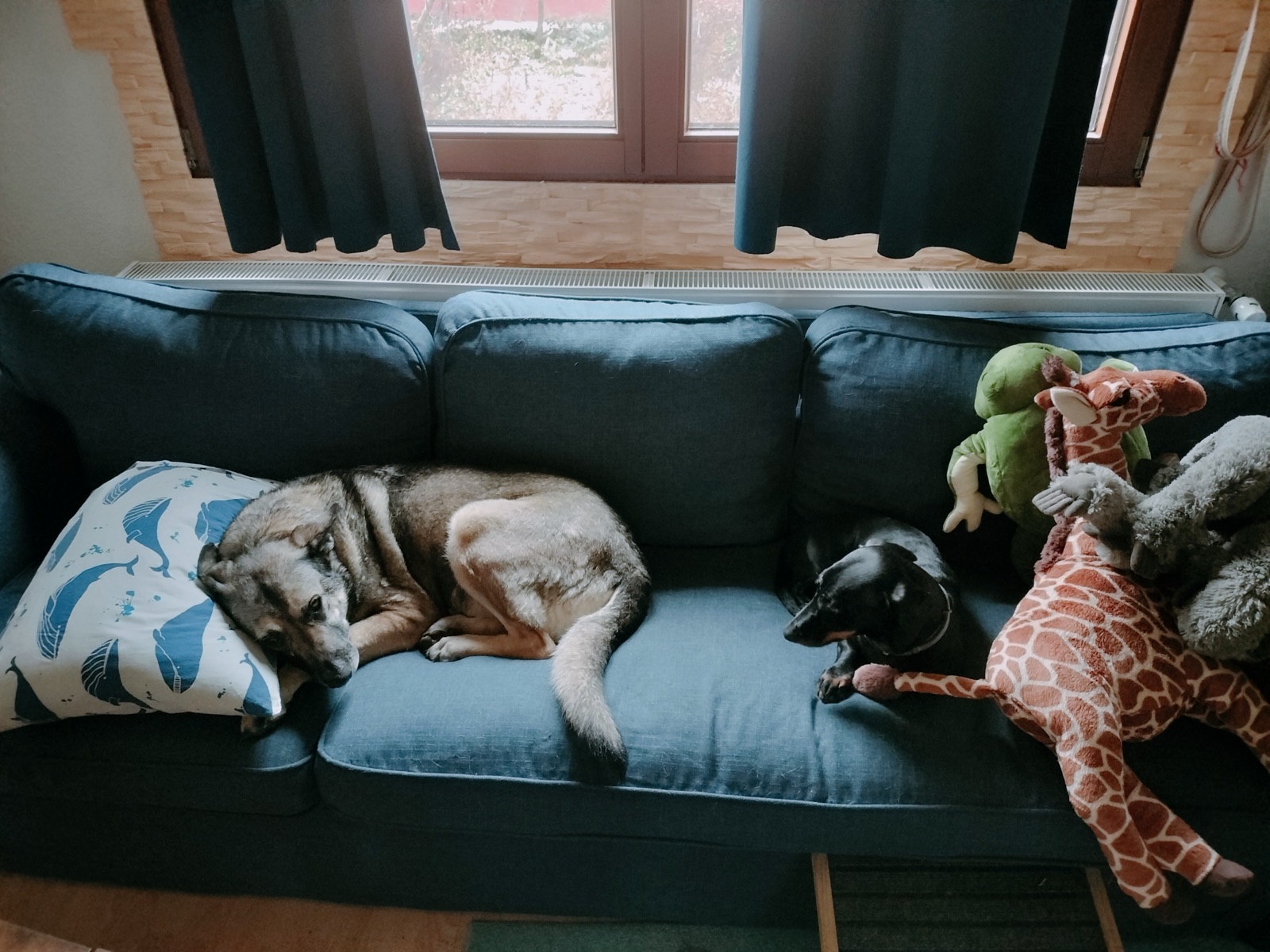
Five dogs... exactly one more than we can handle. We talked with Zefír's other owner about Zefír not coming to us for "dad visits" for a month, and about giving Laska's listing a push.
So on December 17 we decided that, even though Laska was still with us, it was time to have a trial day with Máli. Halfway home we met my partner, with Bab, Lili and Laska. We went home together.
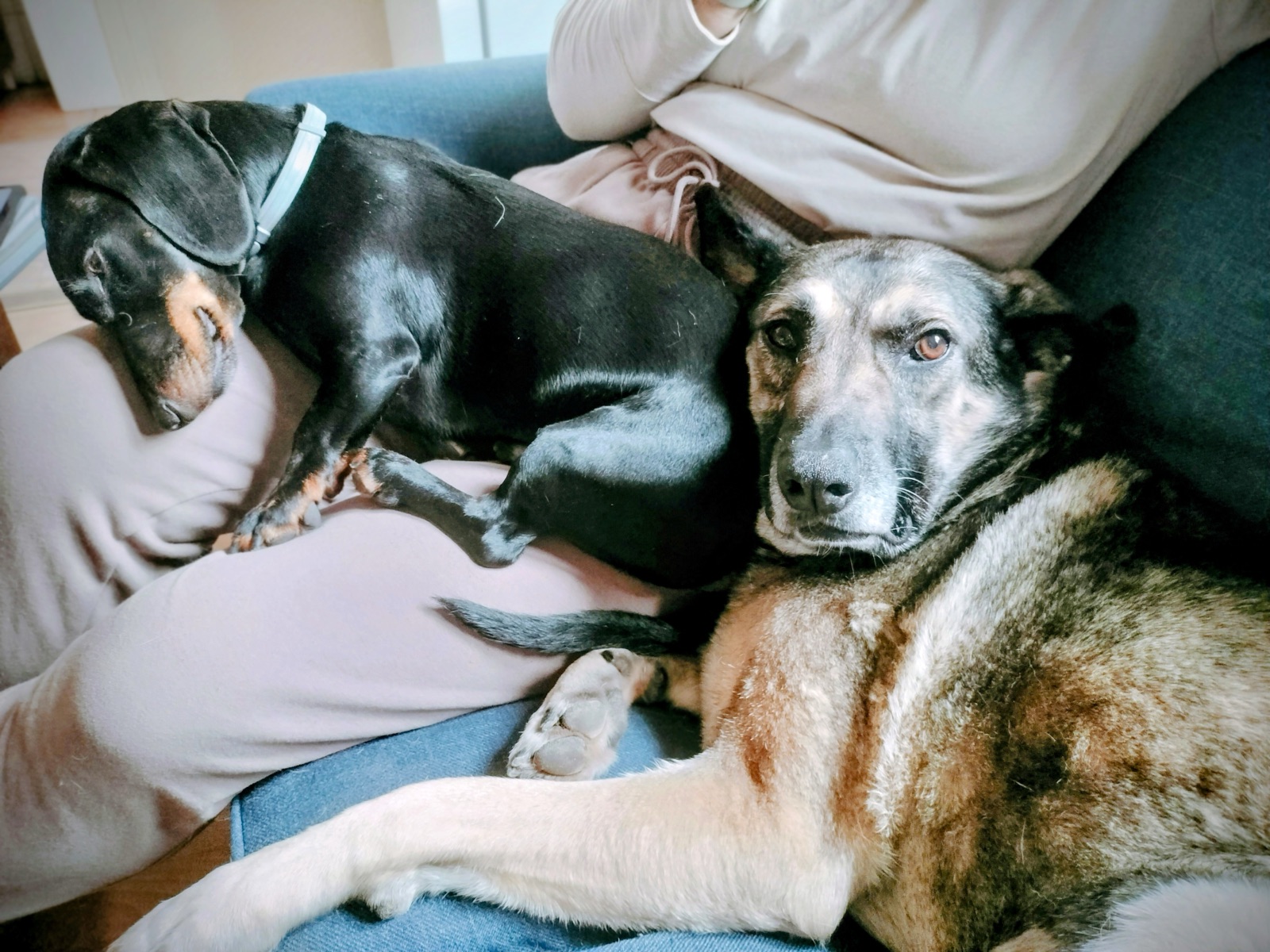
That day the agreement was still that Máli would go back to the shelter the next day. In the morning she came with me and we walked. I was the assistant carer; at the end of the day another carer, Dia, brought her home to us, and I filled out the contract too. The usual two-to-four-week trial period began.
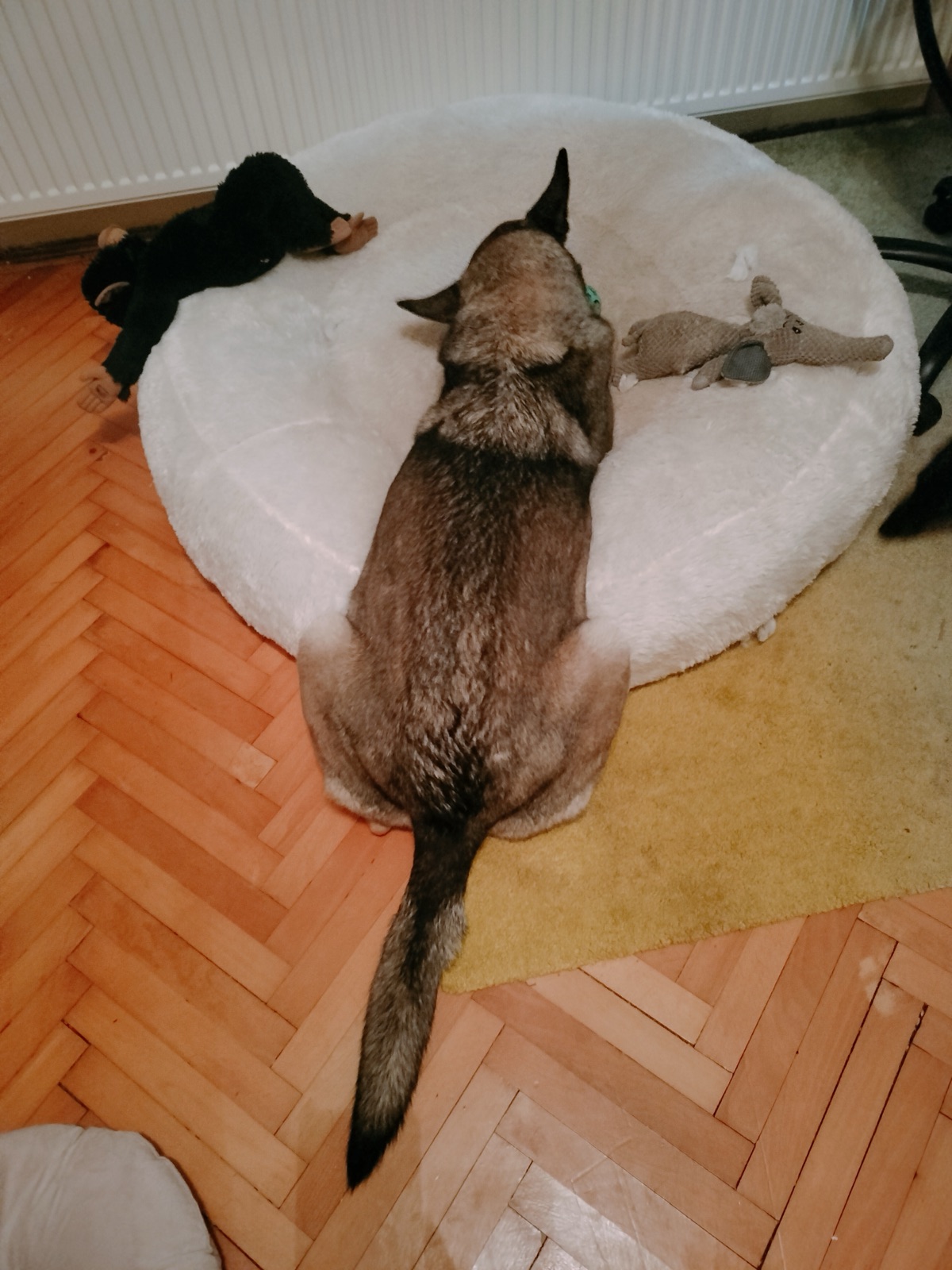
And Lili grumbled. Máli hardly cared — she fell asleep in the middle of it. I think she was just happy to be somewhere soft. We watched them all day. An interesting coalition formed: Lili and Laska, cuddled together on the couch, grumbling at Máli.
Before Christmas Laska met a prospective adopter; it didn't go well. She's a terribly fearful dog; with us the goal was for her to get comfortable with people. She warmed up to me, but even after months she often fled from my partner and shied away from strangers on the street.
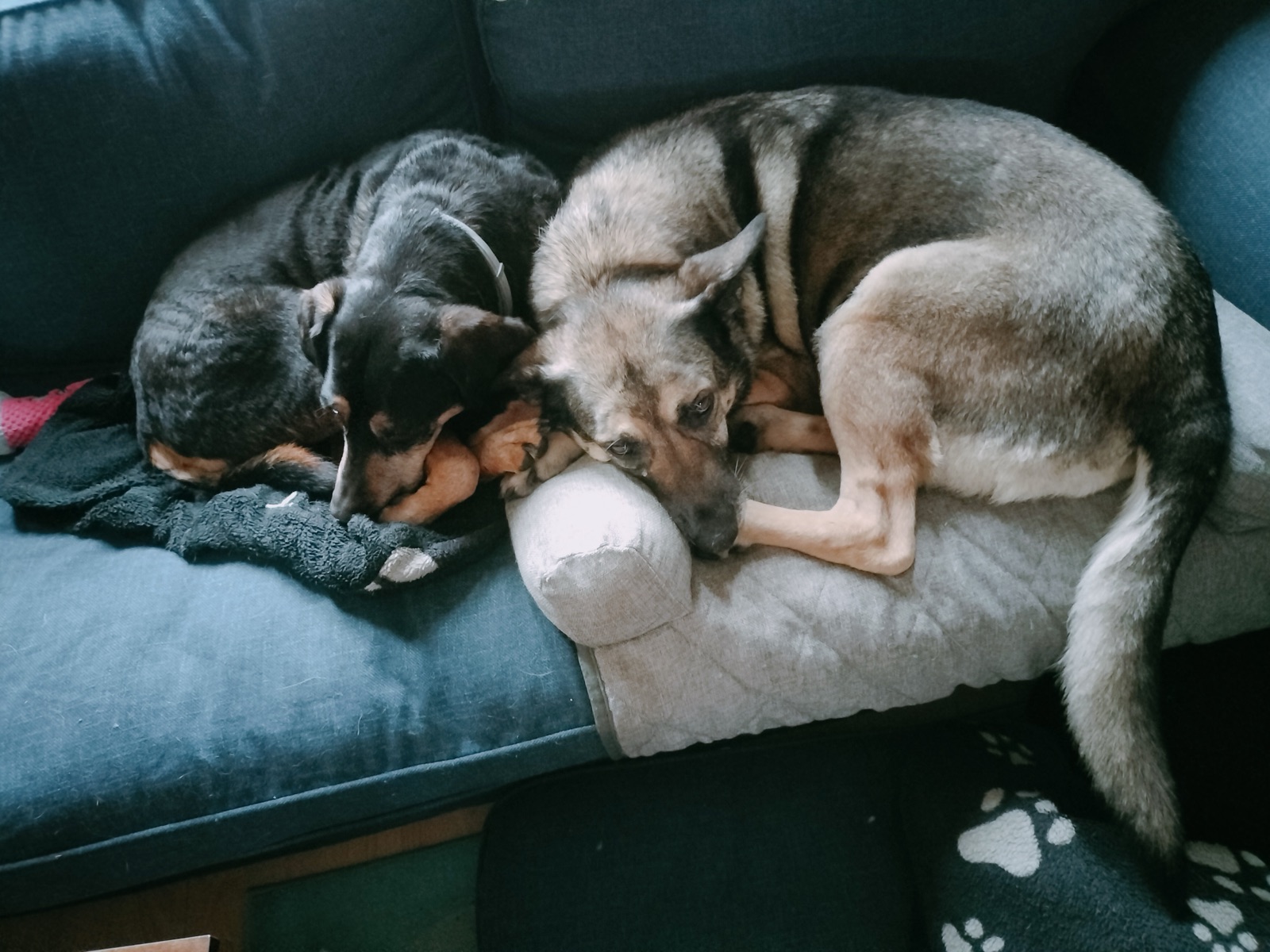
Because of that, we felt she needed to meet even more people. Between the holidays we decided that after New Year's Laska would go back to the shelter — partly for her own socialization, and partly so that Máli would have room to settle in with us.
As luck would have it, she was adopted 9 days later. We were really glad for her; she's happy now with her family, who were able to approach her in a way that suited her temperament.
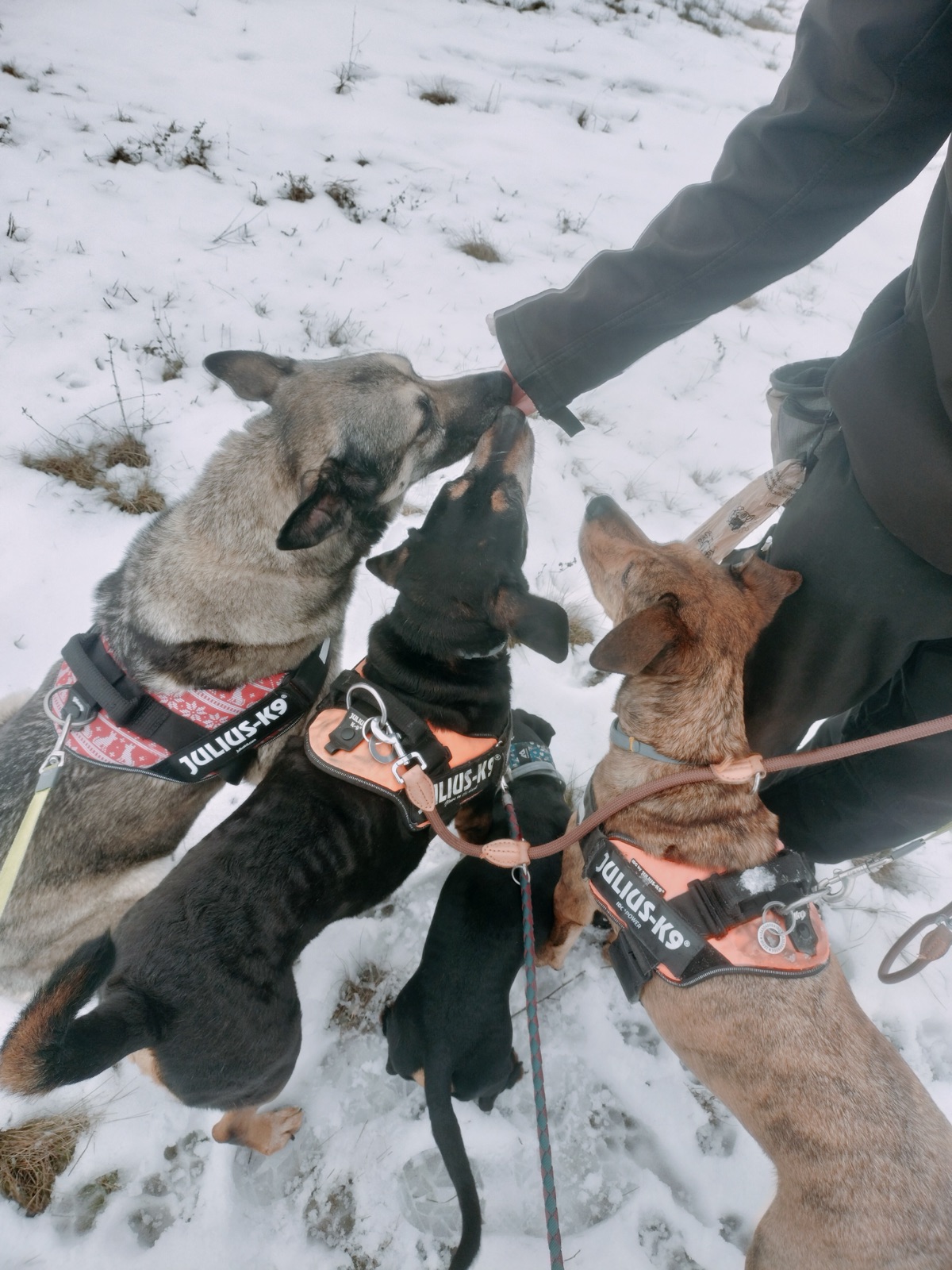
Máli slowly started fitting into our routine and found her place in the family quite well. We introduced her to Zefír too; the first meeting was still awkward, but by the second they knew they were siblings from now on.
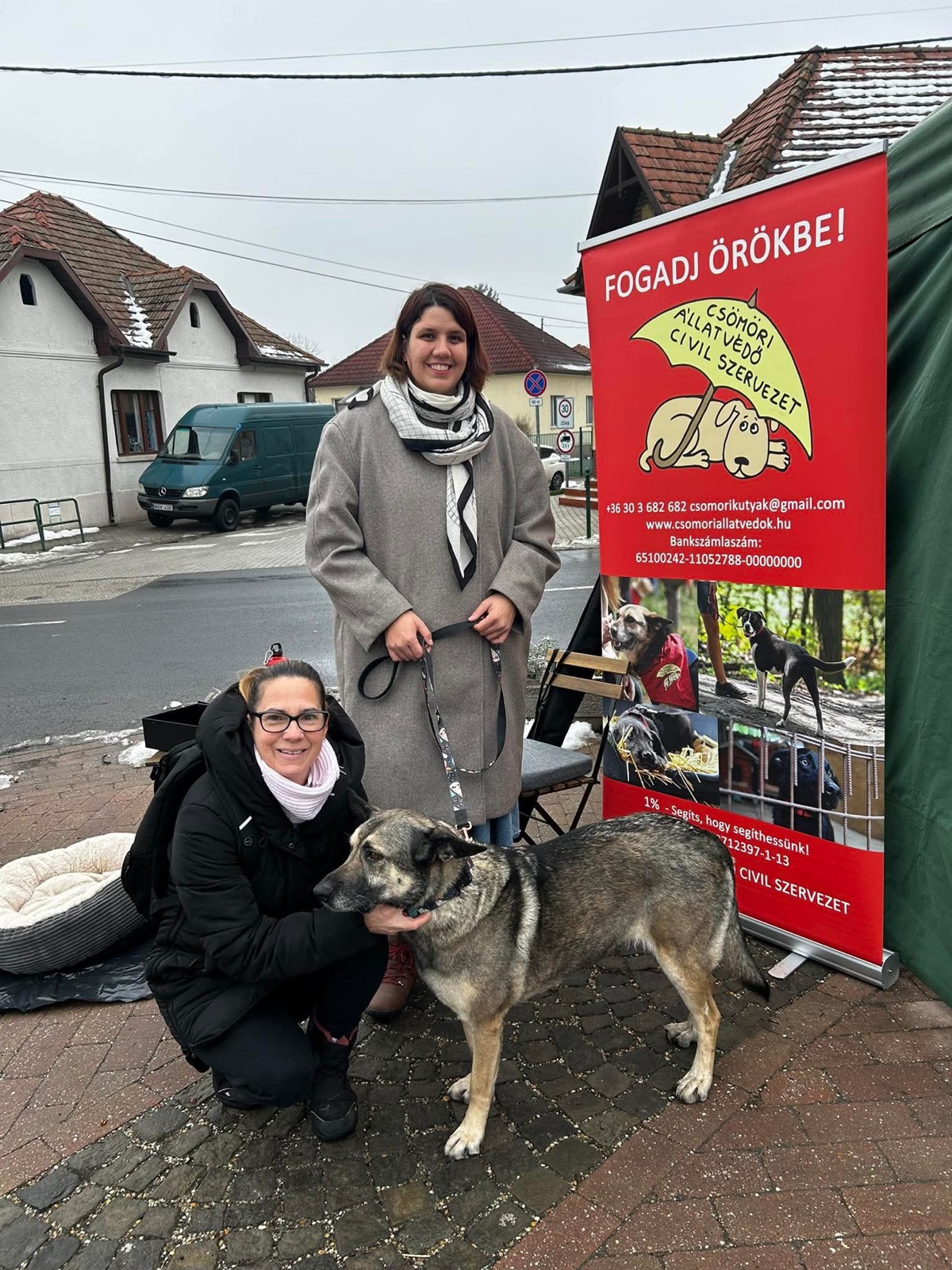
A big cuddly bear. We often call her that — Mackó ("Bear"). She constantly wants closeness, attention, petting. She paws at me if I happen to stop petting her.
I tried practicing with her too. She knows a lot — she probably went to school. Sadly, aggressive training methods may have crept in as well, because if I say "what are you doing?" to her, she runs over and throws herself on her back like a beetle.
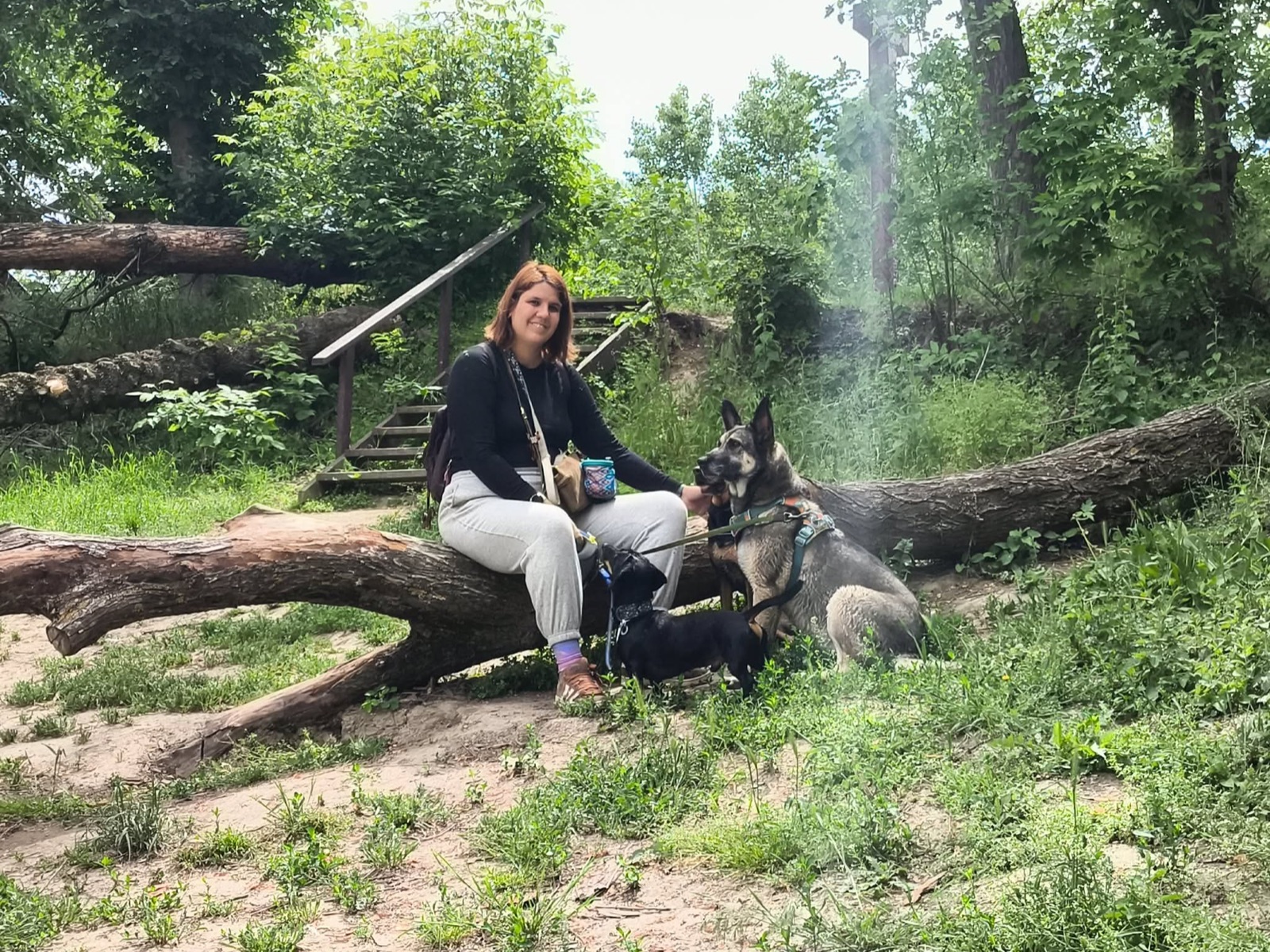
Máli has a big appetite; she eats from a slow-feeder bowl. After the lunchtime walk she usually gets a bigger treat, dried chews. Sometimes she swallows them whole.
The previous owner had told us Máli isn't suited to living with a cat. Well, that put it very mildly. On walks she's constantly on radar with her ears up, watching only for cats. People, dogs, birds interest her far less.
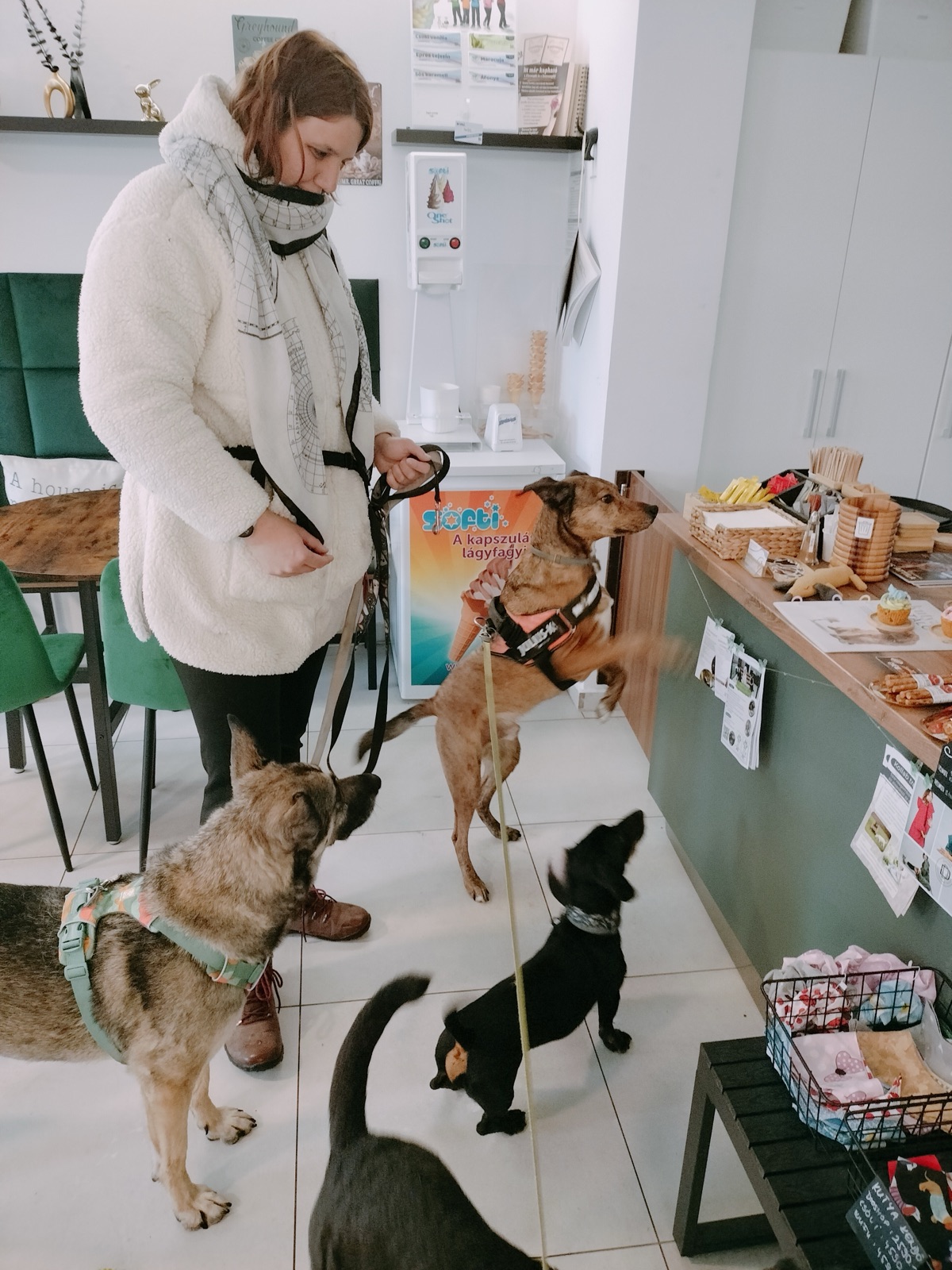
So she's a big cat-hunter; you have to be careful with her. That's exactly why there are no plans for her to walk off-leash. Her instincts in this area are far stronger than our bond. It was hard to accept, but for her the long leash it is.
After the holidays we booked her an appointment at Duo-Vet for a senior check-up. She turned 7 in December; for a dog this large, that's already senior age. They do an ultrasound, examine the body thoroughly, and run a larger lab panel too, which you have to wait for.
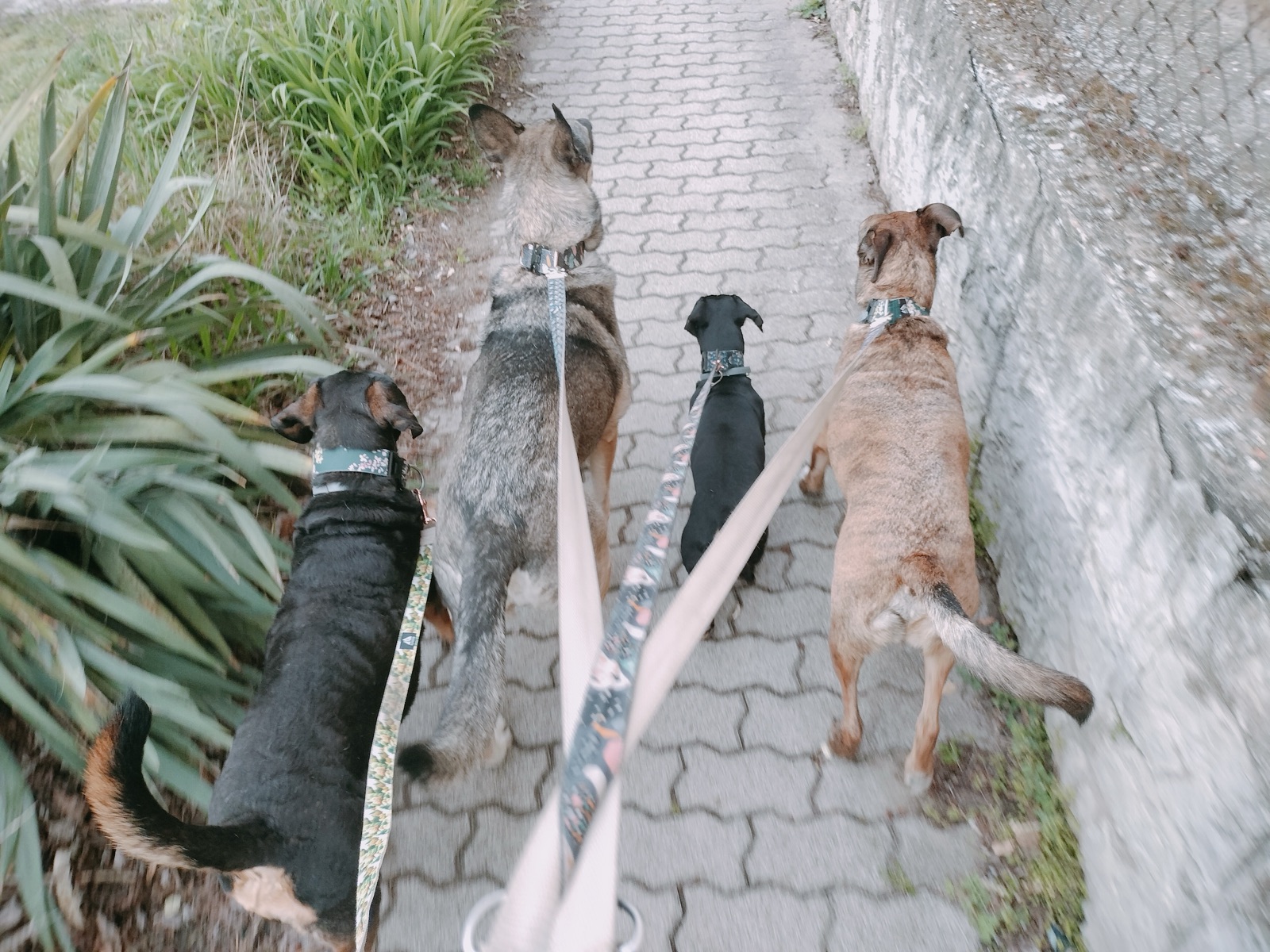
After the exam we left thinking Máli was completely healthy, but that we should still wait for the lab results. Those showed her kidney values were somewhat worse than they should be, and that she had either skin worms or heartworm.
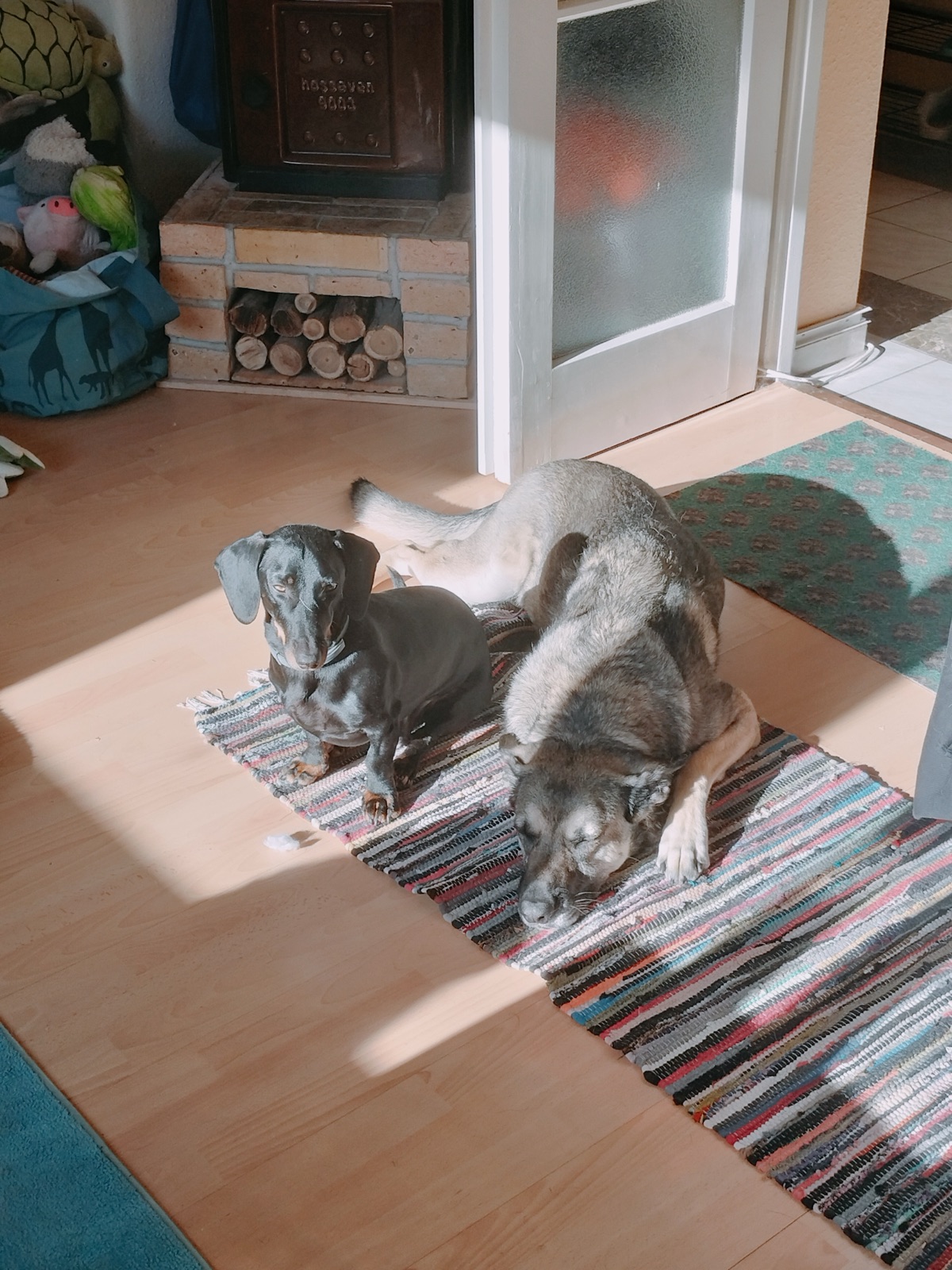
Further testing showed her kidneys weren't so worrying, but she did unfortunately have both skin worms and heartworm. We started the slow course of treatment right away. For a month she took an antibiotic with a probiotic, then a spot-on treatment once a month. As a supplement she gets a dewormer every three months, and Simparica against ticks, offset by two weeks from the spot-on.
According to our Csömör vet, the long course really is long — so instead of six months it's a sure 1–2 years, and even during that time the result can be a false negative. That's the road we set out on.
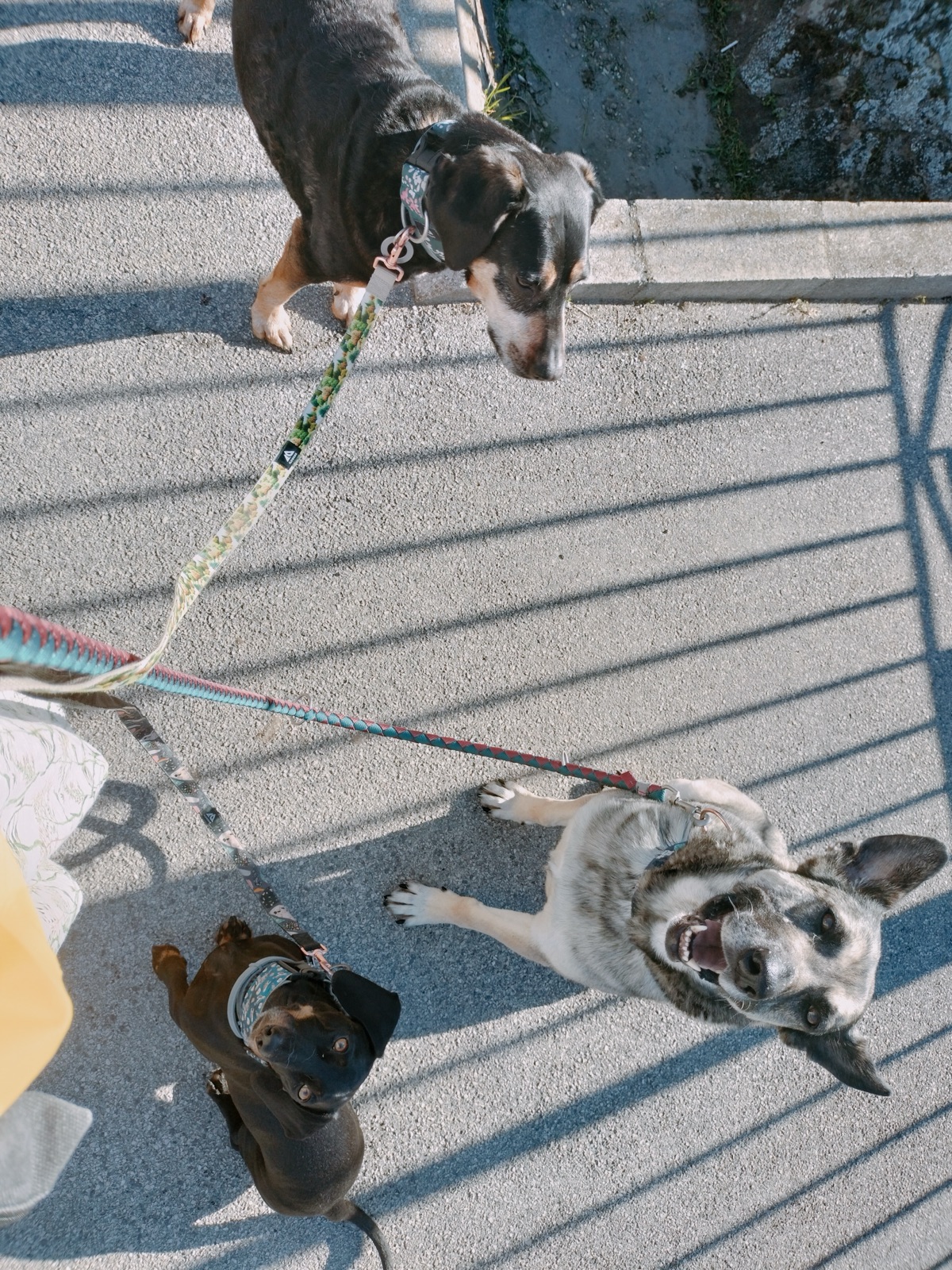
Máli tolerates the treatment well; she's willing to accept the meds in a treat (bologna, liver pâté, frankfurter). If we put them in her usual daily food, she licks around them and spits them out. In that respect too, we know her well by now.
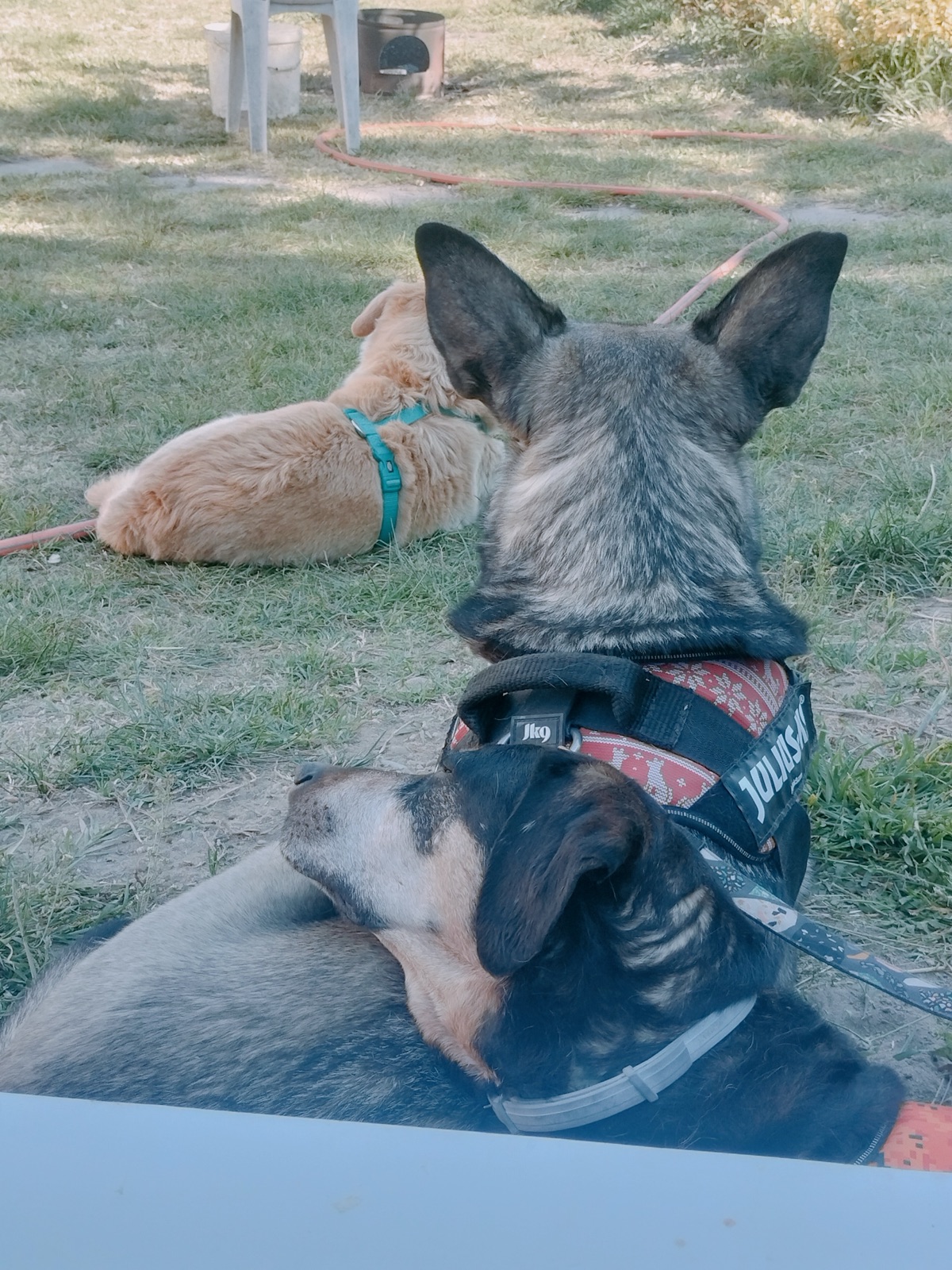
On Sunday, June 7, we were visiting friends when she first lifted her leg, in pain. I checked her paw, there was nothing in it, I stroked it all over. Afterward she seemed fine.
By Monday evening she was visibly and consistently limping. Tuesday morning we were already at the Csömör vet. He examined her thoroughly and, on her left hind leg, felt a harder, bony part. It came up that, since she's an escape artist, maybe something had healed badly in the past — but we'd need to keep an eye on it. For now she got a painkiller.
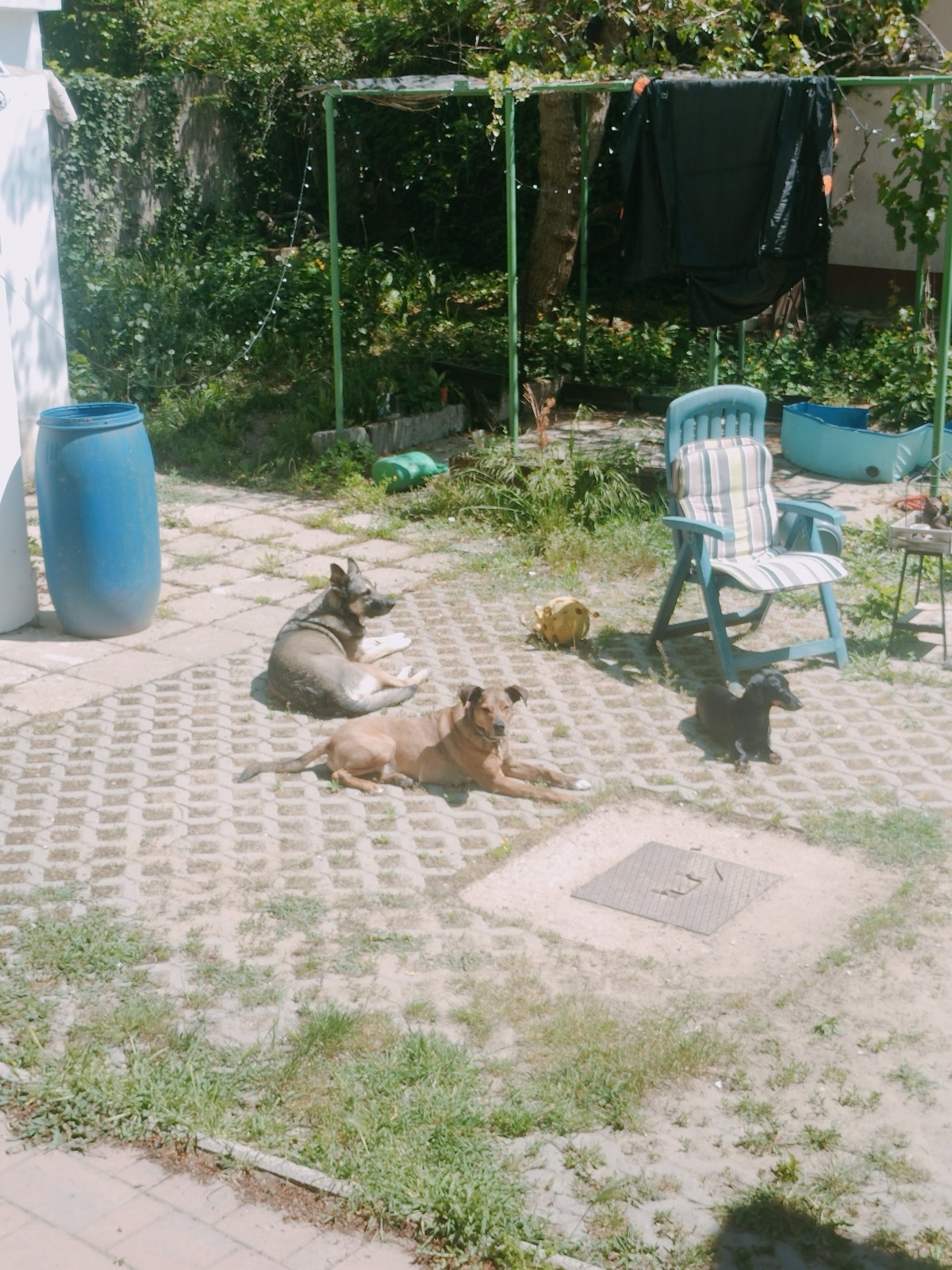
It didn't improve over a few days, and the following Monday she was X-rayed. That's June 15. It revealed a tumor originating in the bone of her left hind leg, and that's why she was limping.
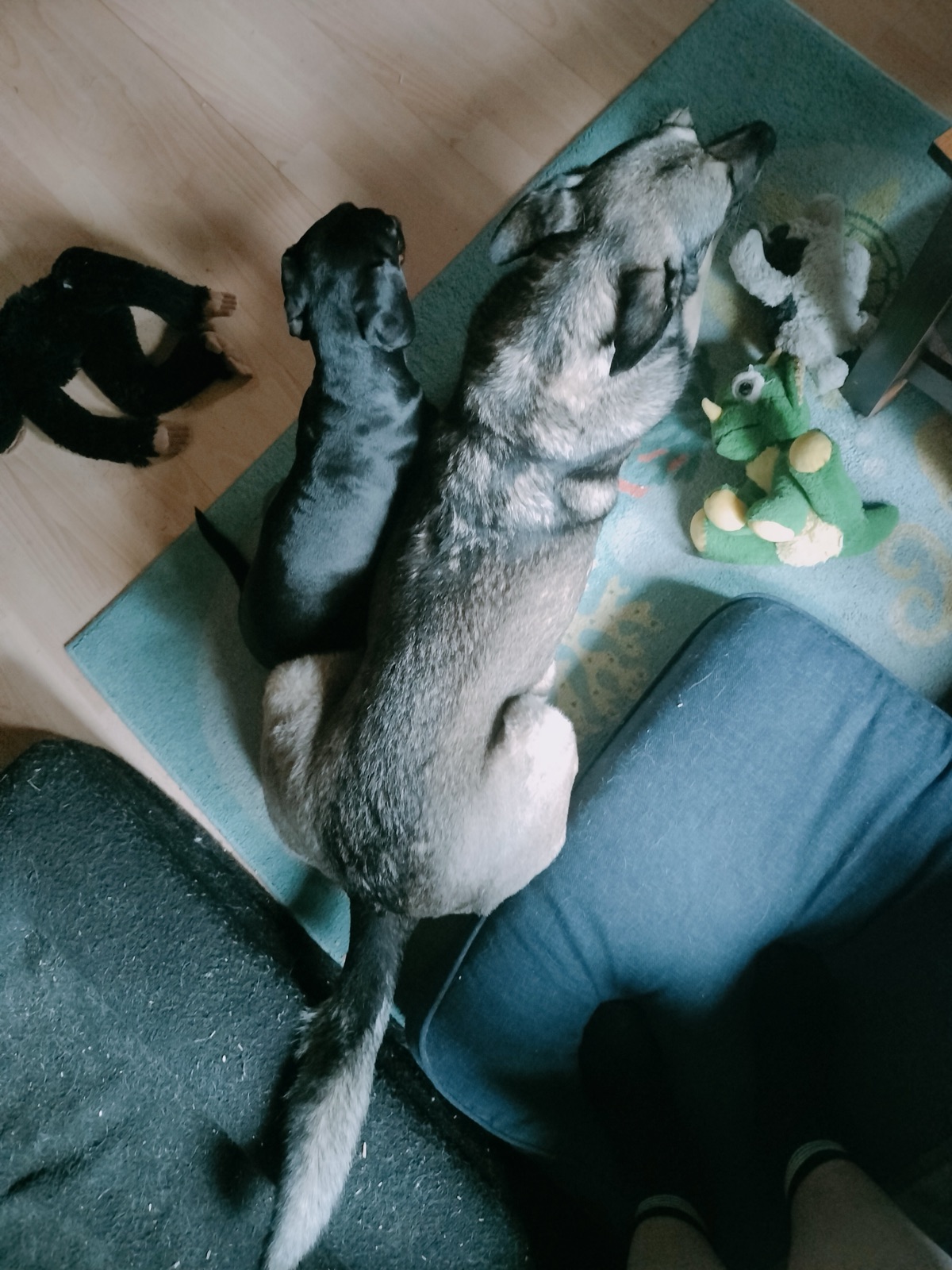
By Wednesday evening we were at the oncologist at Duo-Vet; the cytology had come back by then too, showing a very aggressive tumor. Honestly, I didn't know what to prepare for.
By then I'd been through the emotional rollercoaster over a few days, and that day I went in afraid the doctor would say she had to be put to sleep — that there was nothing we could do and she was in such pain that even that couldn't be helped.
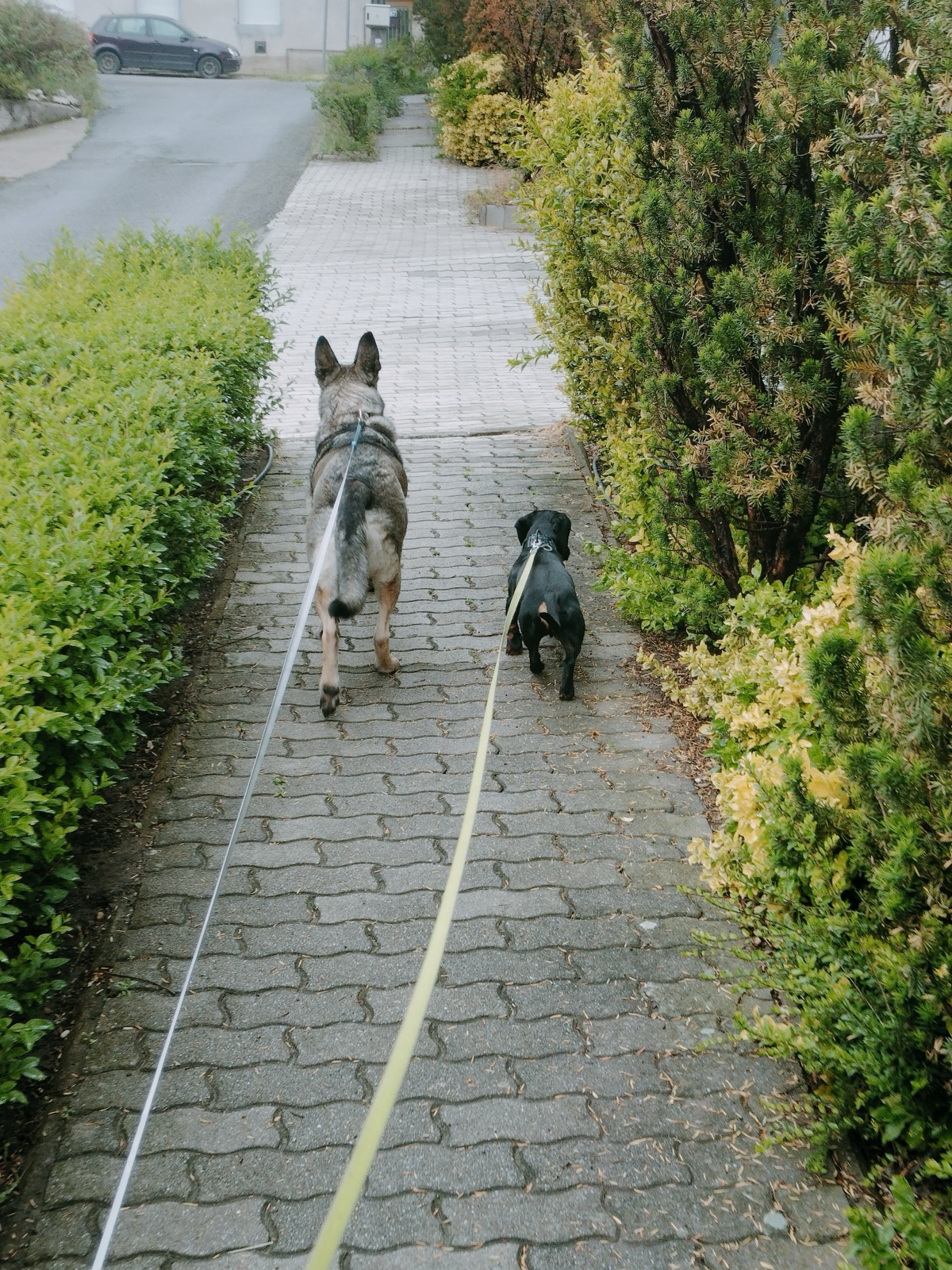
Instead, we were given alternatives. The following Monday her leg would have to be amputated, then chemotherapy starting Friday. There's an experimental treatment too — an anti-tumor vaccine made using the tumor itself.
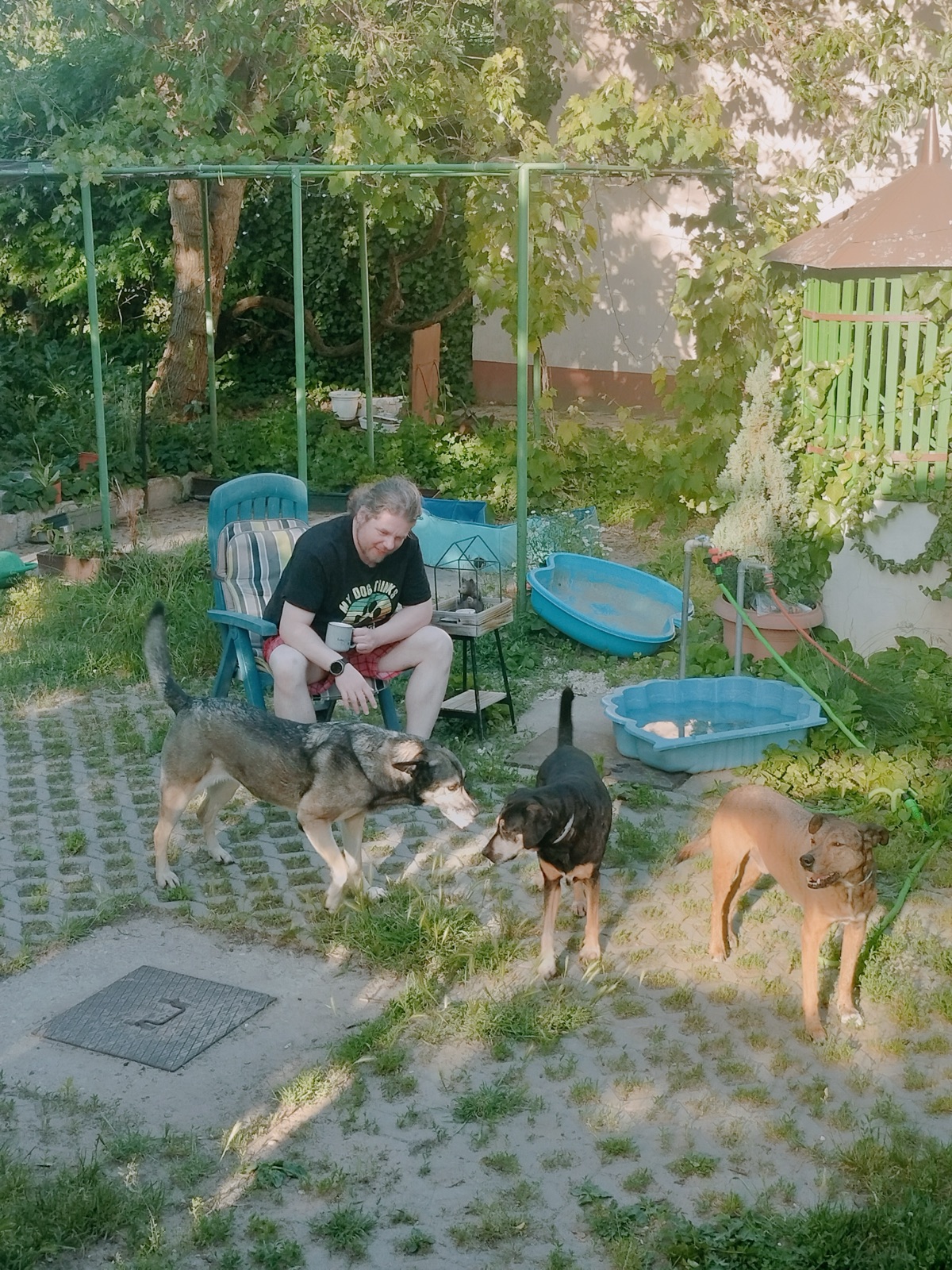
From all this I only heard the numbers: this way she could get 2–3 years back. If we did nothing, she'd have a few months, at most half a year, in great pain. 2–3 pain-free years are worth everything.
I'd already prepared myself mentally for the amputation, because several people had said there was no other way. The doctor confirmed that that leg was already done for — it only meant a burden and pain for her. Within 1–2 days she'd adjust to bearing weight on three legs.
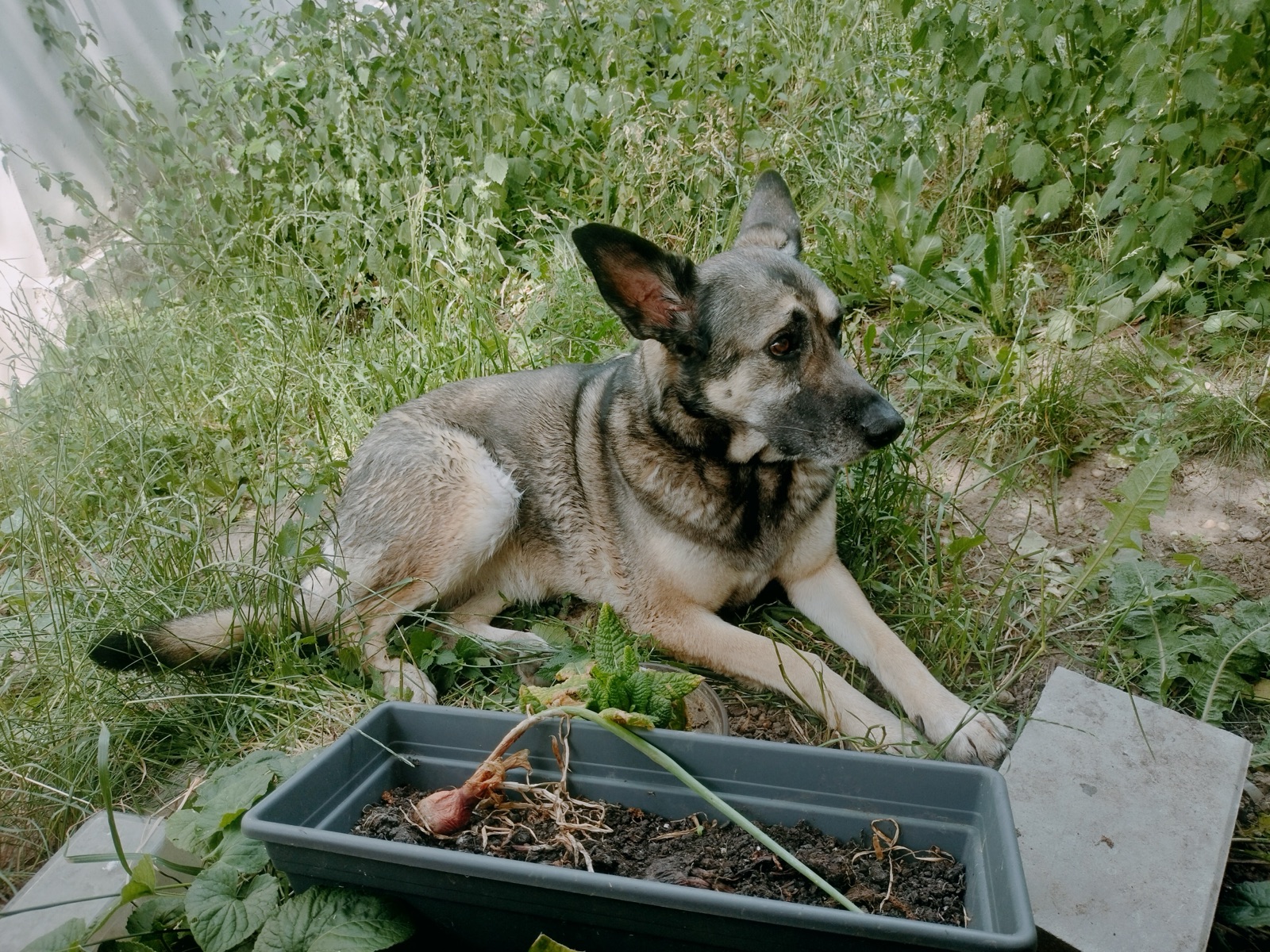
The surgeon performed the amputation nicely, so to speak. He didn't cut into muscle or bone but rounded it off. That also helps her recovery.
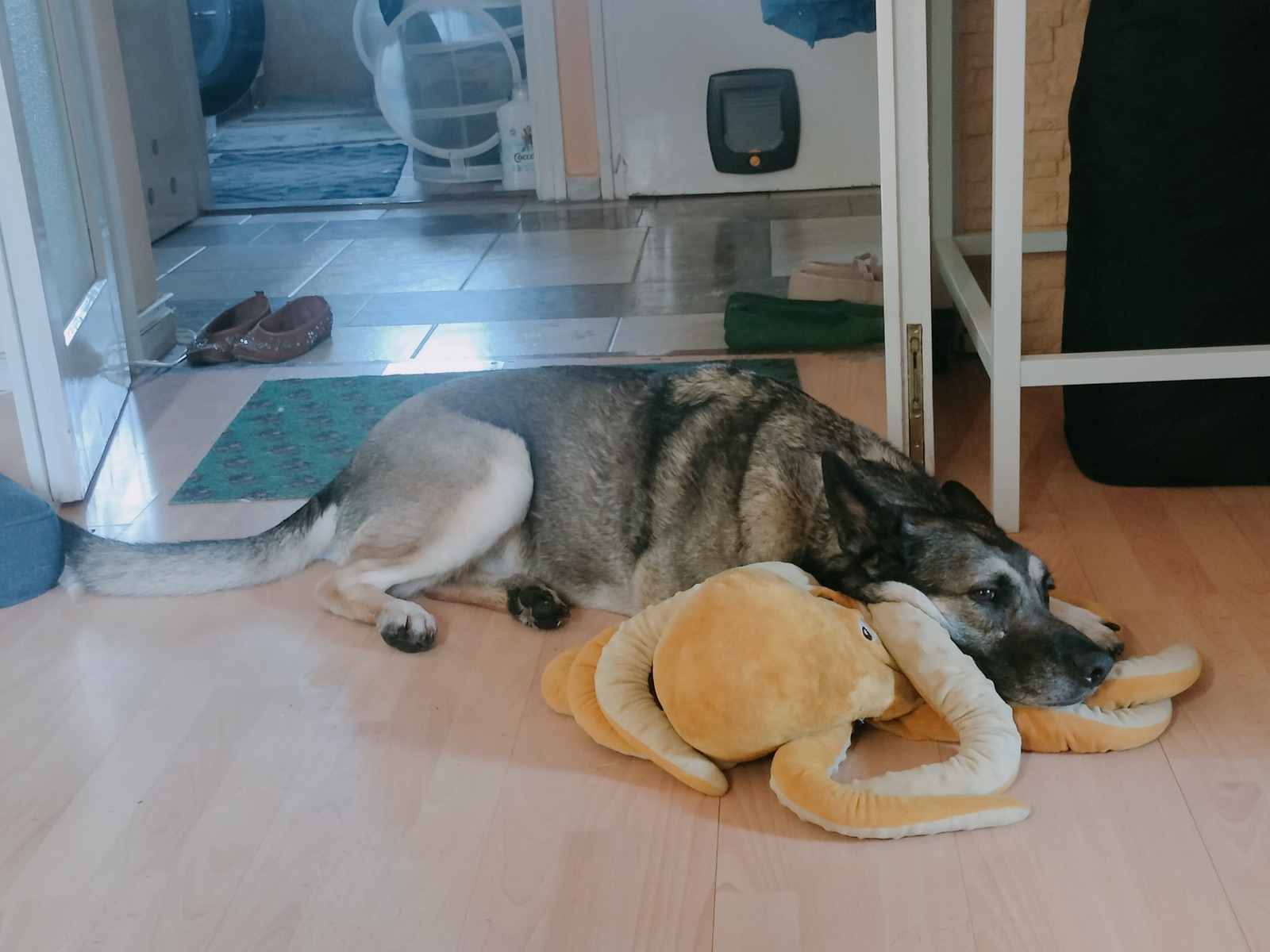
For the chemotherapy we chose the complex therapy; depending on the histology it'll be 6–8 sessions, every three weeks. If we start chemo within 5 days of the amputation, it can mean +200 days in terms of life expectancy.
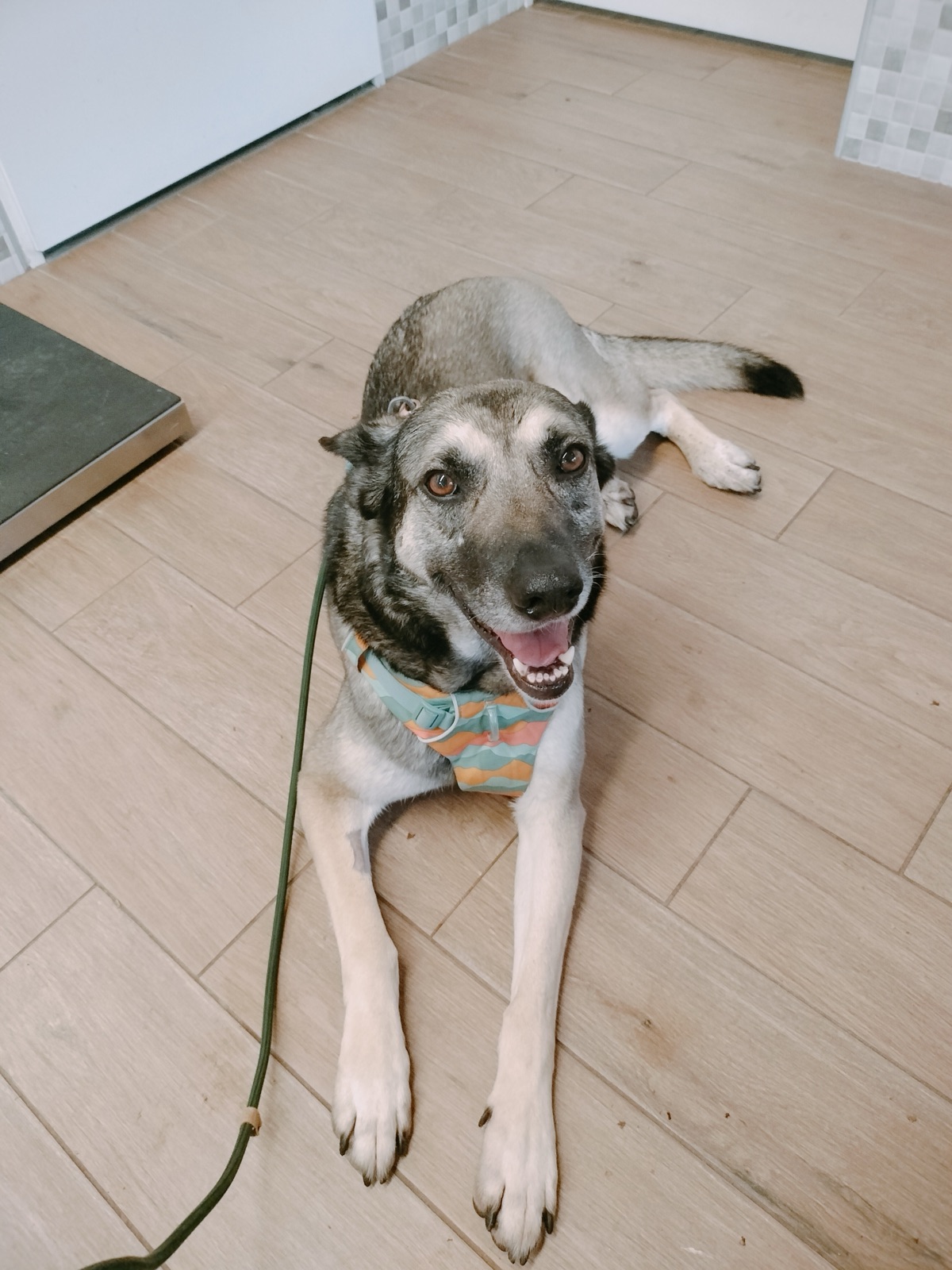
The anti-tumor vaccine may be useful against recurrence. The doctor also said it's rare for a similar tumor to form in the other hind leg.
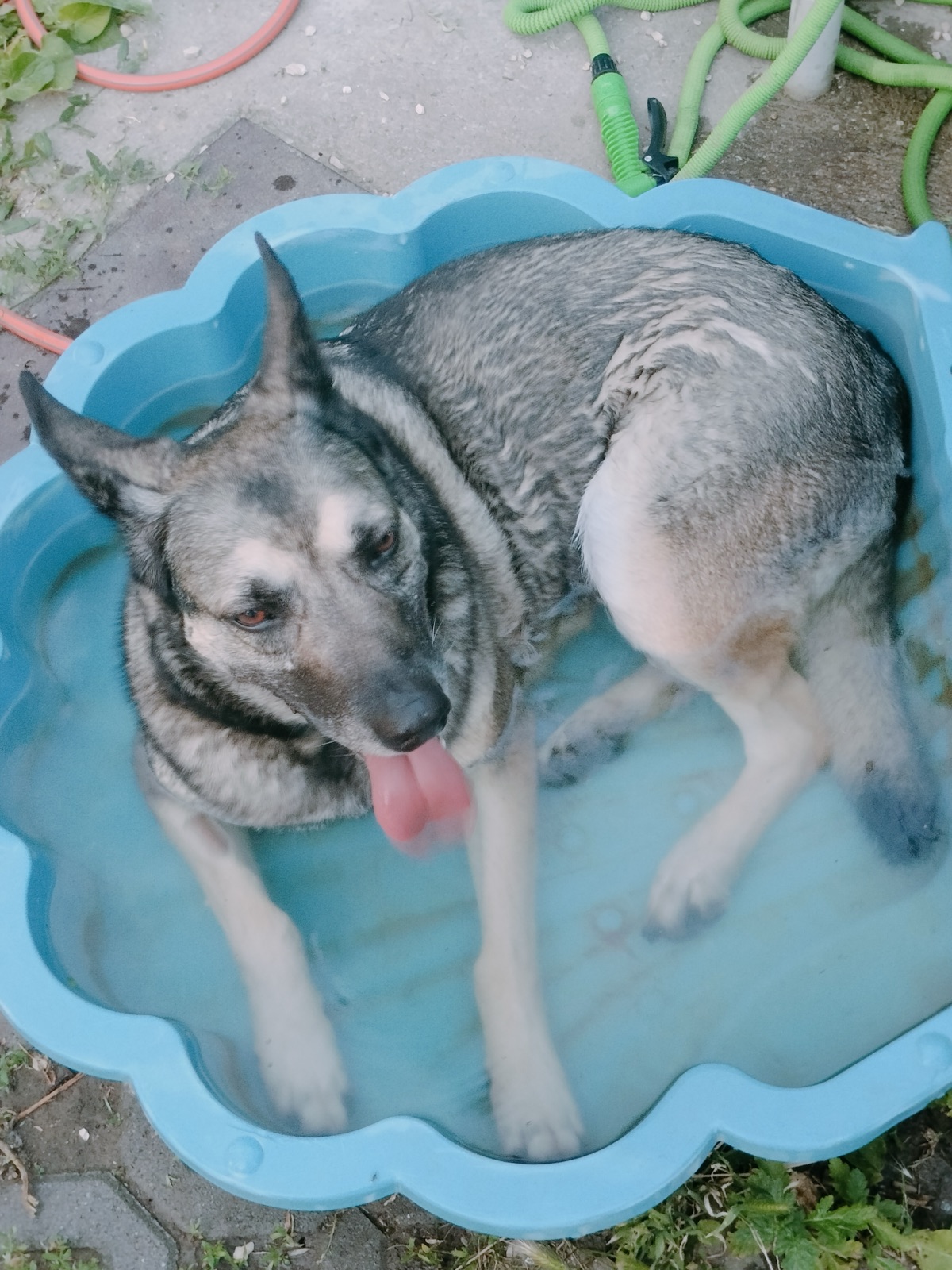
A friend of mine said we'd learn a lot from this, and she's right. But at the same time, as my partner remarked, this isn't how we'd have wanted to learn these things.
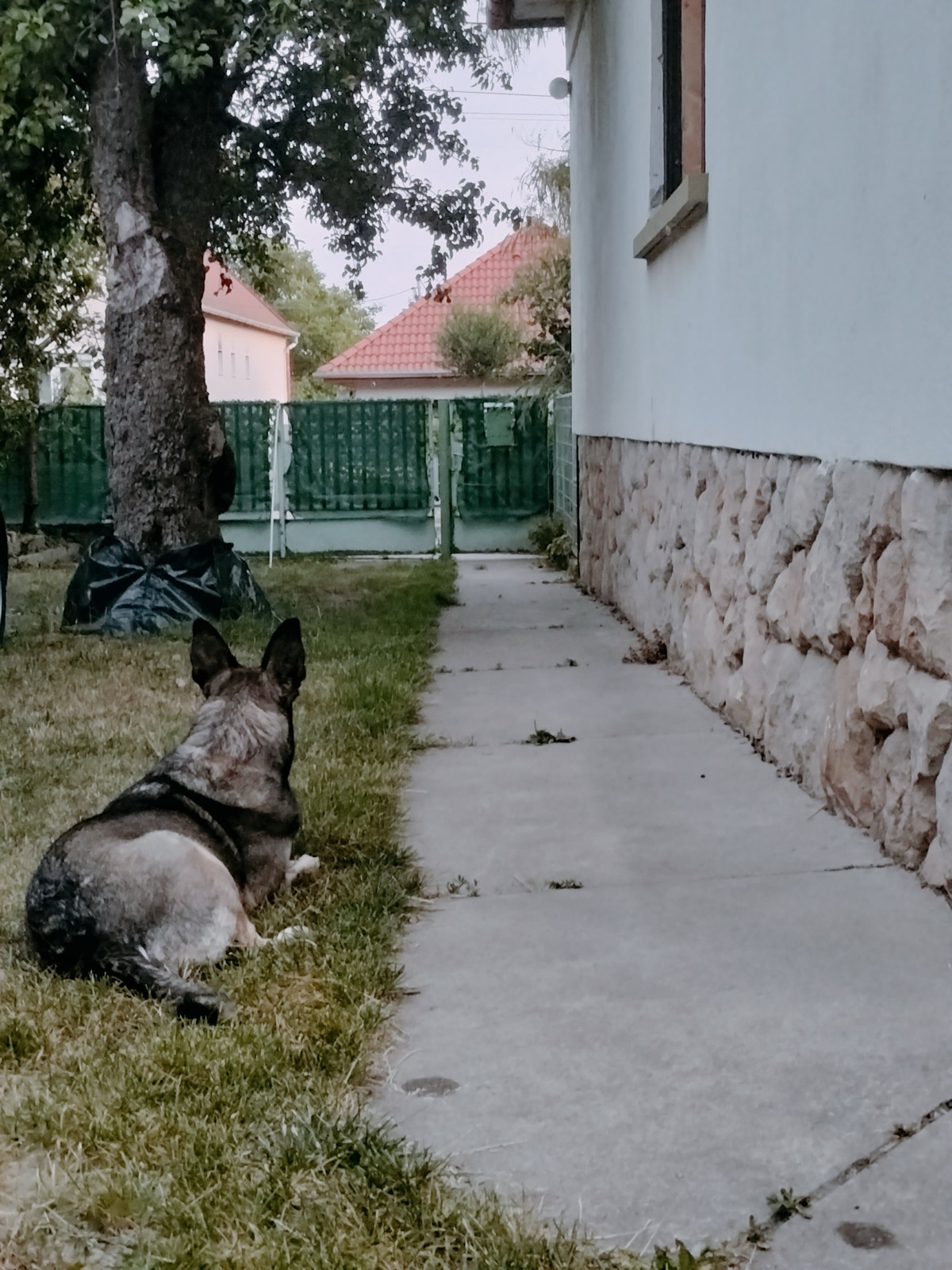
On June 22 they amputated Máli's left hind leg. We took her in for 9 a.m.; at that point she only got a sedative and a painkiller. She last ate at midnight, at the doctor's request. In the waiting room she smiled sweetly.
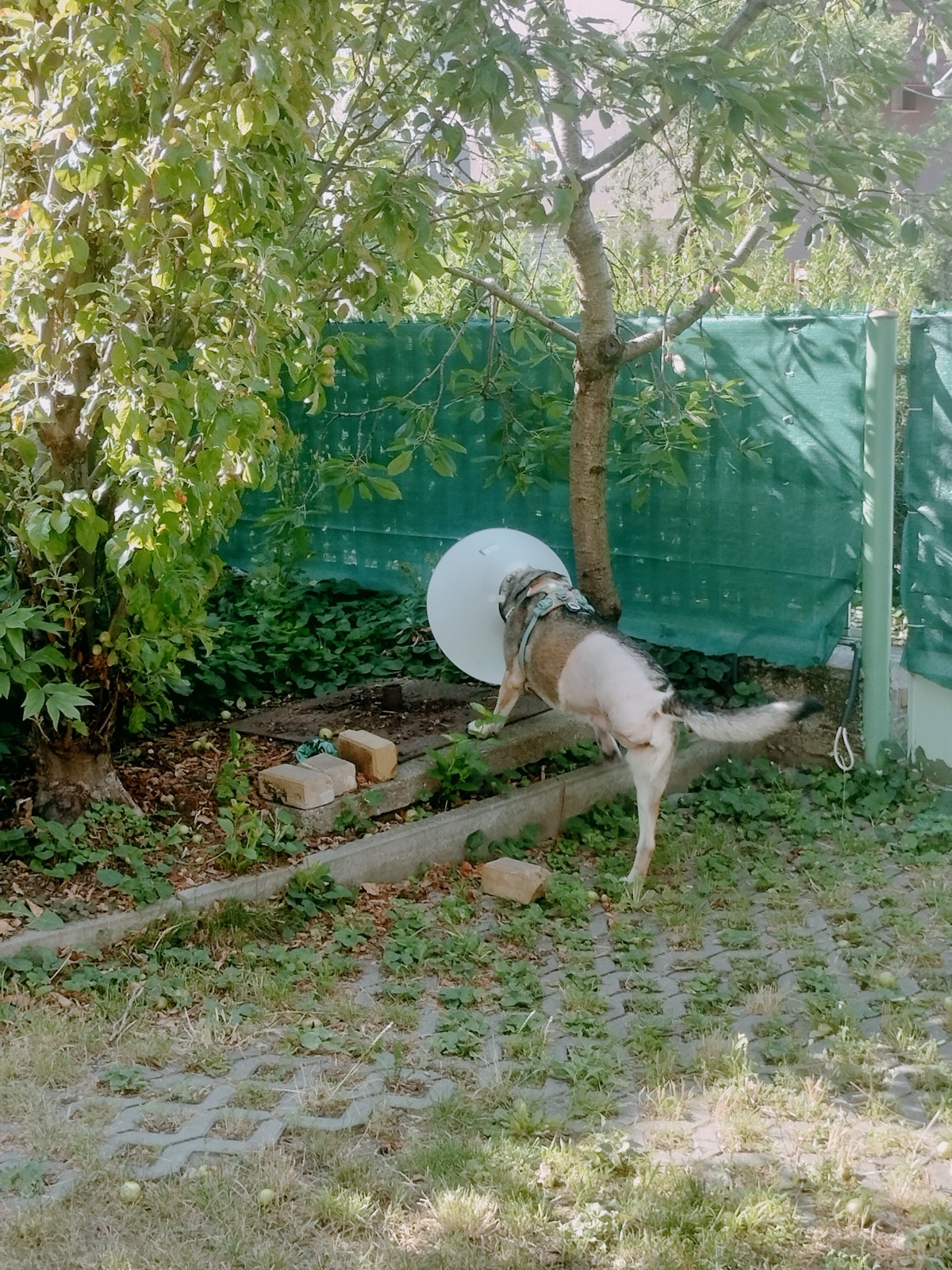
Because of the heartworm, the anesthesia was dangerous for Máli, though the week before she'd finally had a negative rapid test. Unfortunately it could have been a false negative, but it gave us hope at least in that regard.
In the morning we were told they'd call when the surgery was over — it was supposed to be a couple of hours, scheduled for 11:30. By 2 we were really biting our nails. In the end we could pick her up around 6; everything had gone fine.
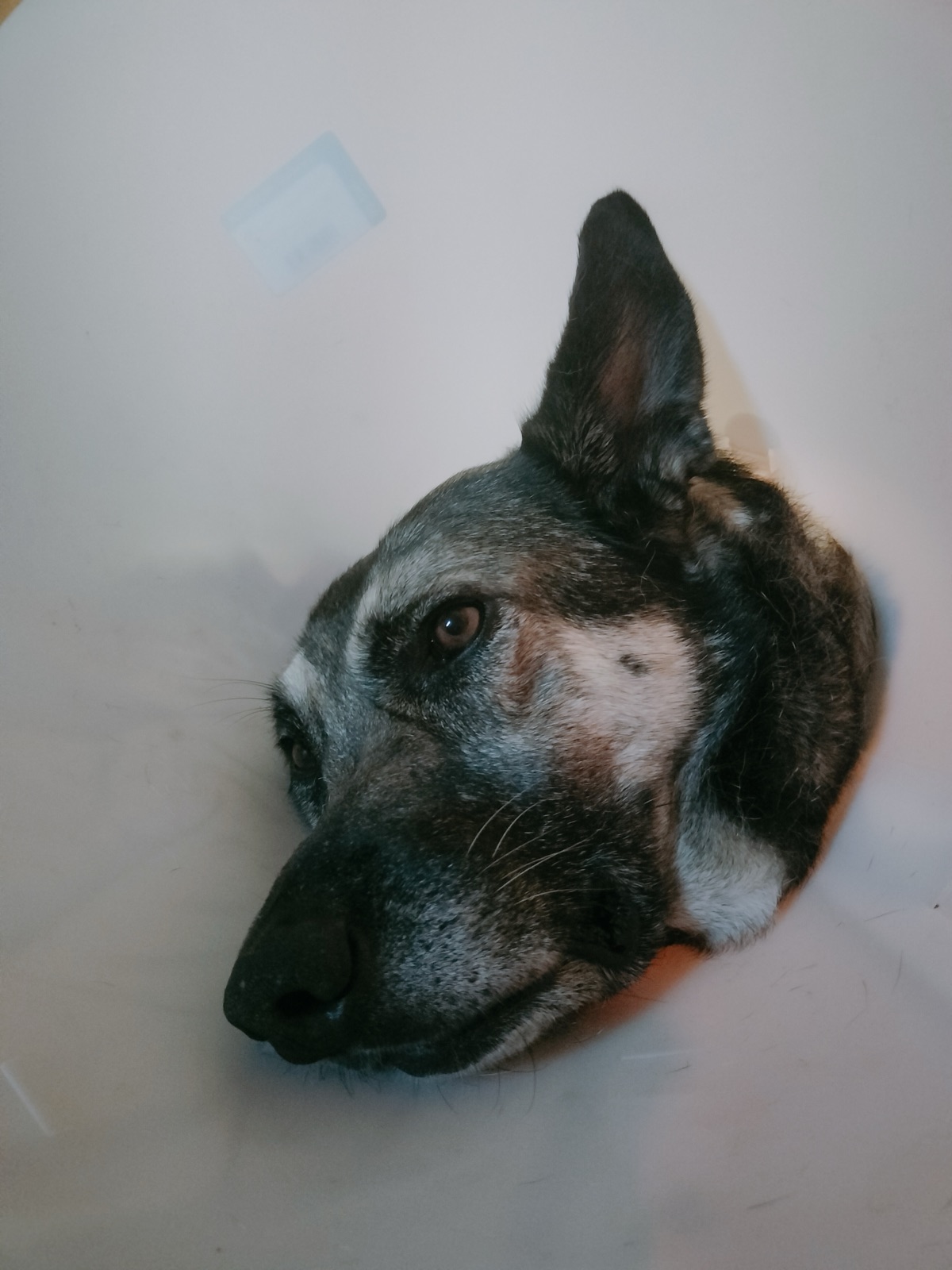
The anesthesiologist explained everything thoroughly; we're very grateful to her. On the whole, Duo-Vet is staffed by well-prepared, animal-loving professionals. For anything serious, we always turn to them.
Until around noon the next day Máli was fairly disoriented — sometimes she whimpered, sometimes she dreamed. But the hardest part was behind her. Two days after the surgery we could already walk a kilometer, with a short rest. The heat also limited how much she could move.
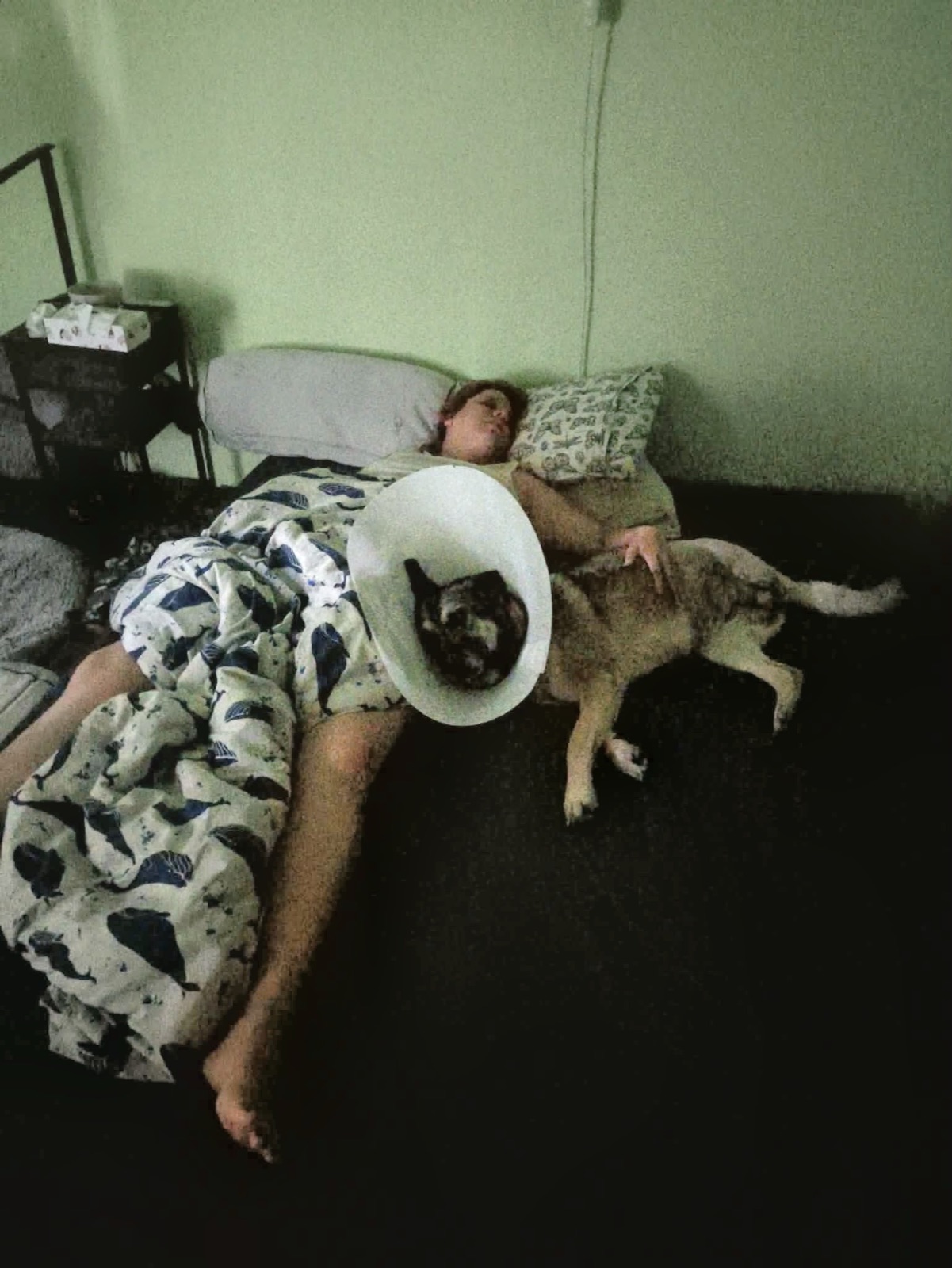
After that we walked every evening — or rather, she ran and I fluttered along behind her. Because of the three-legged dynamics, it's easier for her to go fast. I was very proud of her. Some people didn't even notice she was walking on three legs.
On Friday she got through the chemo; an orange fluid ran in over 20 minutes. I could be with her the whole time, which meant a lot. At first she stood, then she lay down. She didn't understand why we were waiting there. They said side effects could show up from the next day on.
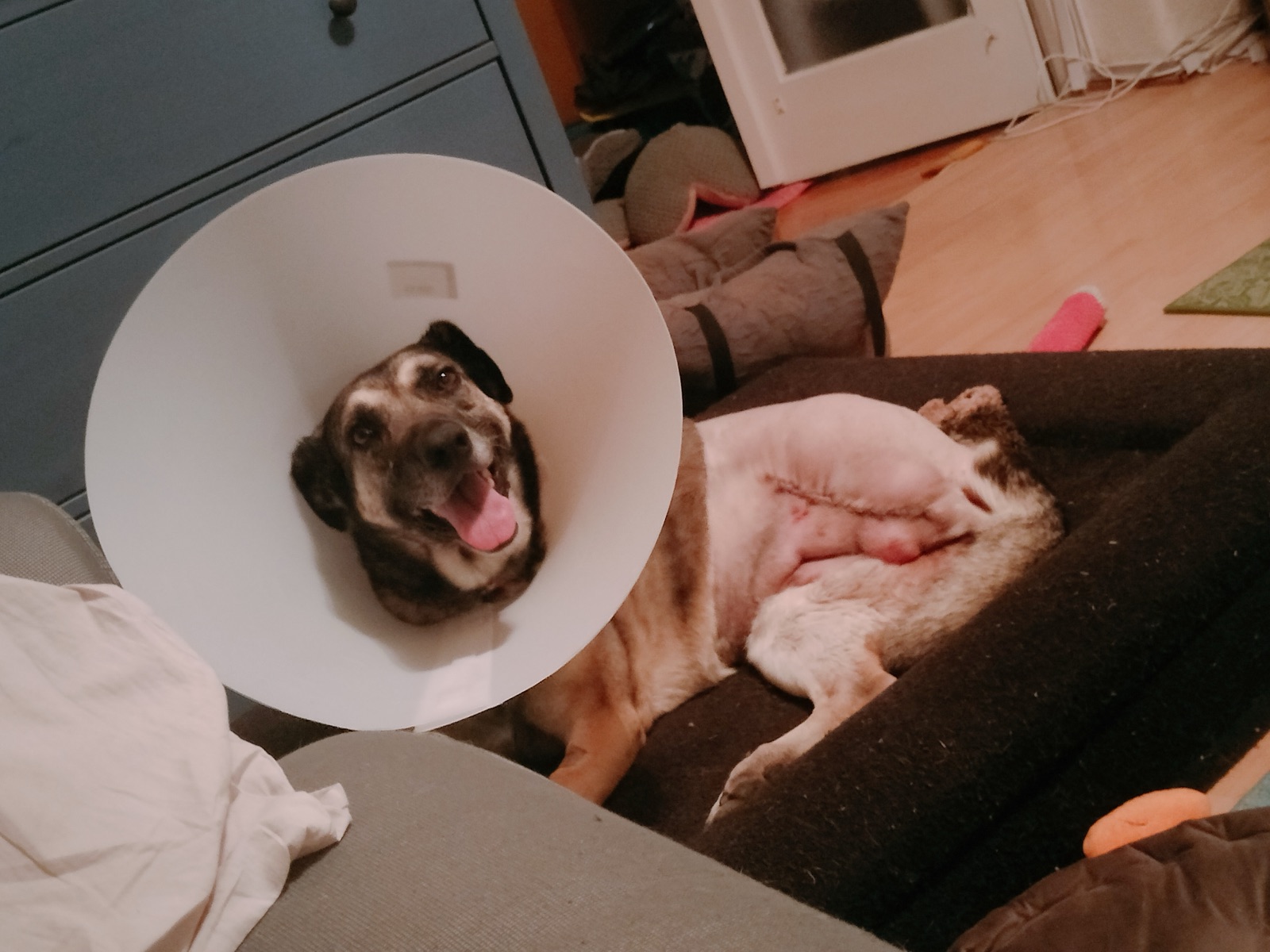
In the first weeks she didn't look good — you could see she was down. The suture stayed nice throughout, but they warned us that edema could form underneath, because the body would keep circulating toward the now-missing leg.
Fluid can seep out through the edema, in which case we should blot it up. On Saturday morning Máli stood up, and half a liter to a liter of thick reddish-yellowish fluid ran out of her; her skin couldn't take it and split open. Despite every precaution, she unfortunately got an infection and needed antibiotics.
The next morning I rushed to Minivet, taking the bus in the middle of a heat alert. There was a paper note posted saying they only accept cash on weekends. It's not posted on their website. Who has cash in 2026? I didn't have a card on me either — I pay by phone.
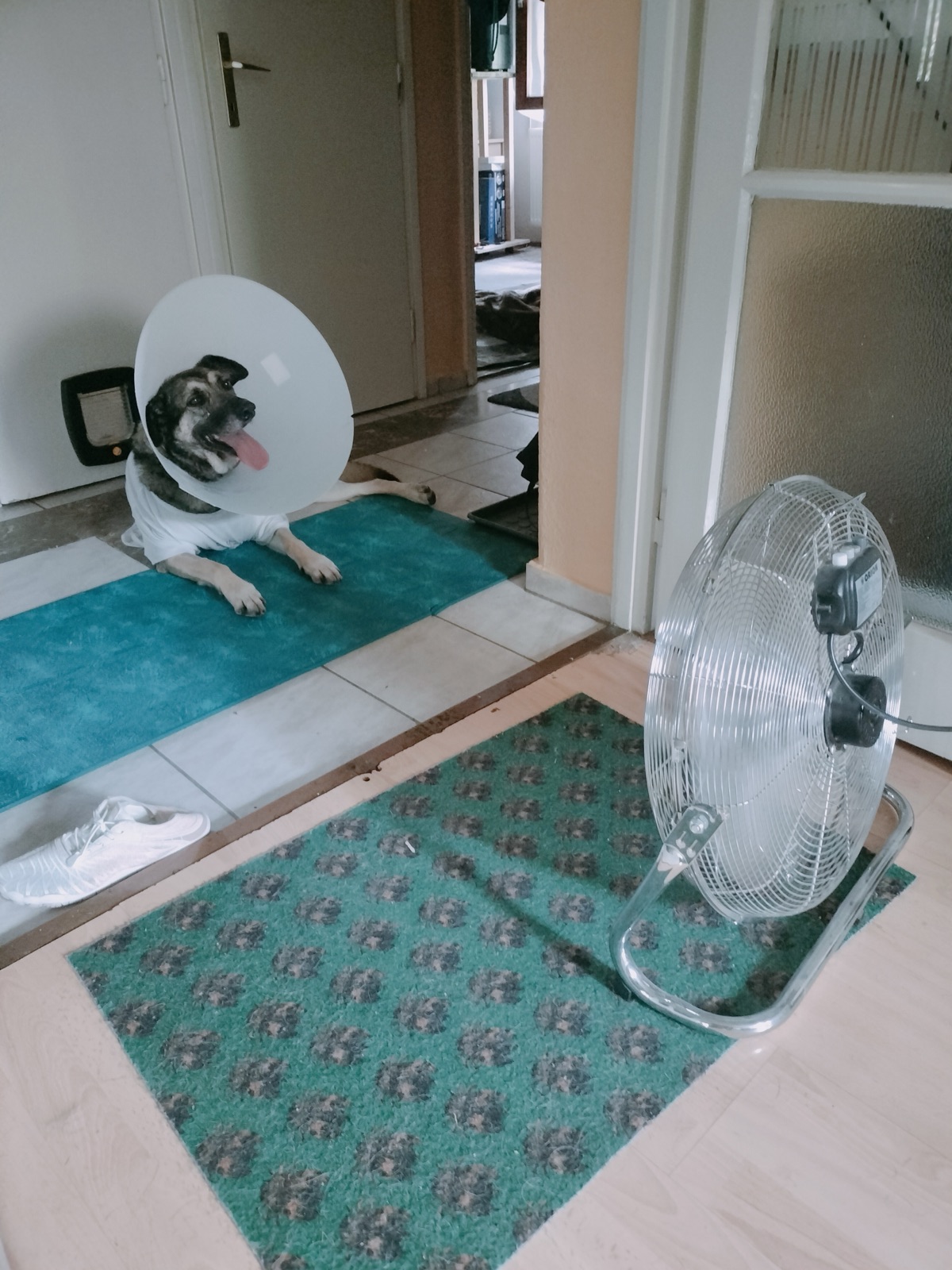
That's when I cried for the first time, on the way home — I'd held out until then. That they really have to hassle you with this. The card terminal stood right there and they wouldn't turn it on. Nobody comes to the vet on a weekend for fun. My partner had to make another trip to get the medicine with cash.
On Monday we also got a Betadine saline solution from her Csömör vet, and we cleaned the wound with it three times a day. She also got a probiotic, Venoruton since the surgery, a stomach protectant, a painkiller, and canine Béres Drops.
She has her own medicine box, portioned out for each day. Luckily the chemo had no side effects this first time; she got an anti-nausea med too, just in case. Every time I thought her meds were about to run out, she got more.
Máli acts as if this whole thing doesn't concern her — it bothers her more than anything. The pain decreased a lot after the amputation, and you can see it on her. She's lively, she plays, she gets into mischief, she runs. She paws in her sleep for me to pet her.
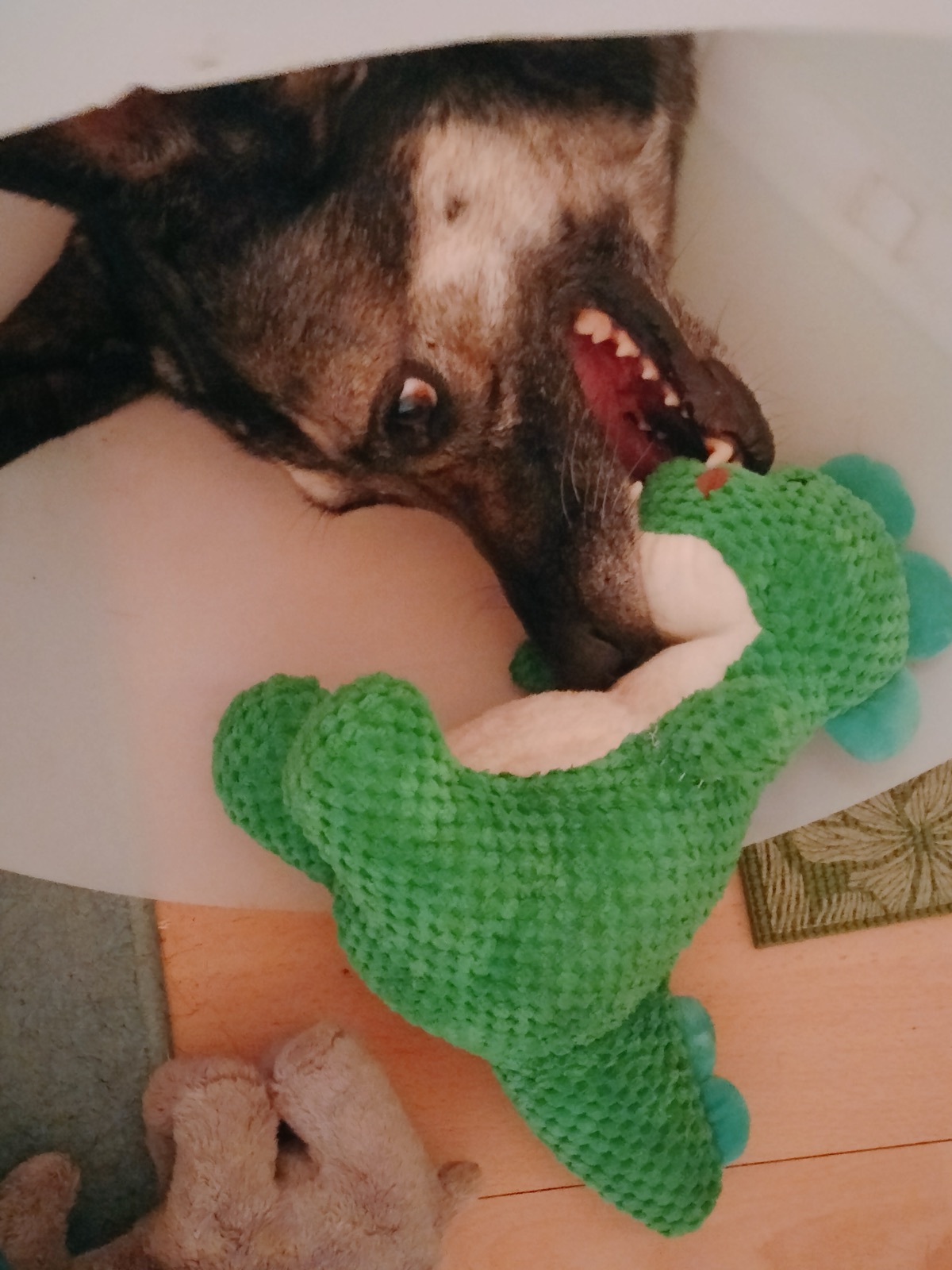
And this is where we are in time.